Commercial Property Security: A Practical Guide for Property Managers
Effective commercial property security combines access control, surveillance, and a human response element on-site guards, concierge security, or mobile patrol matched to each property's type, risk level, and hours.
Aug 11, 2026
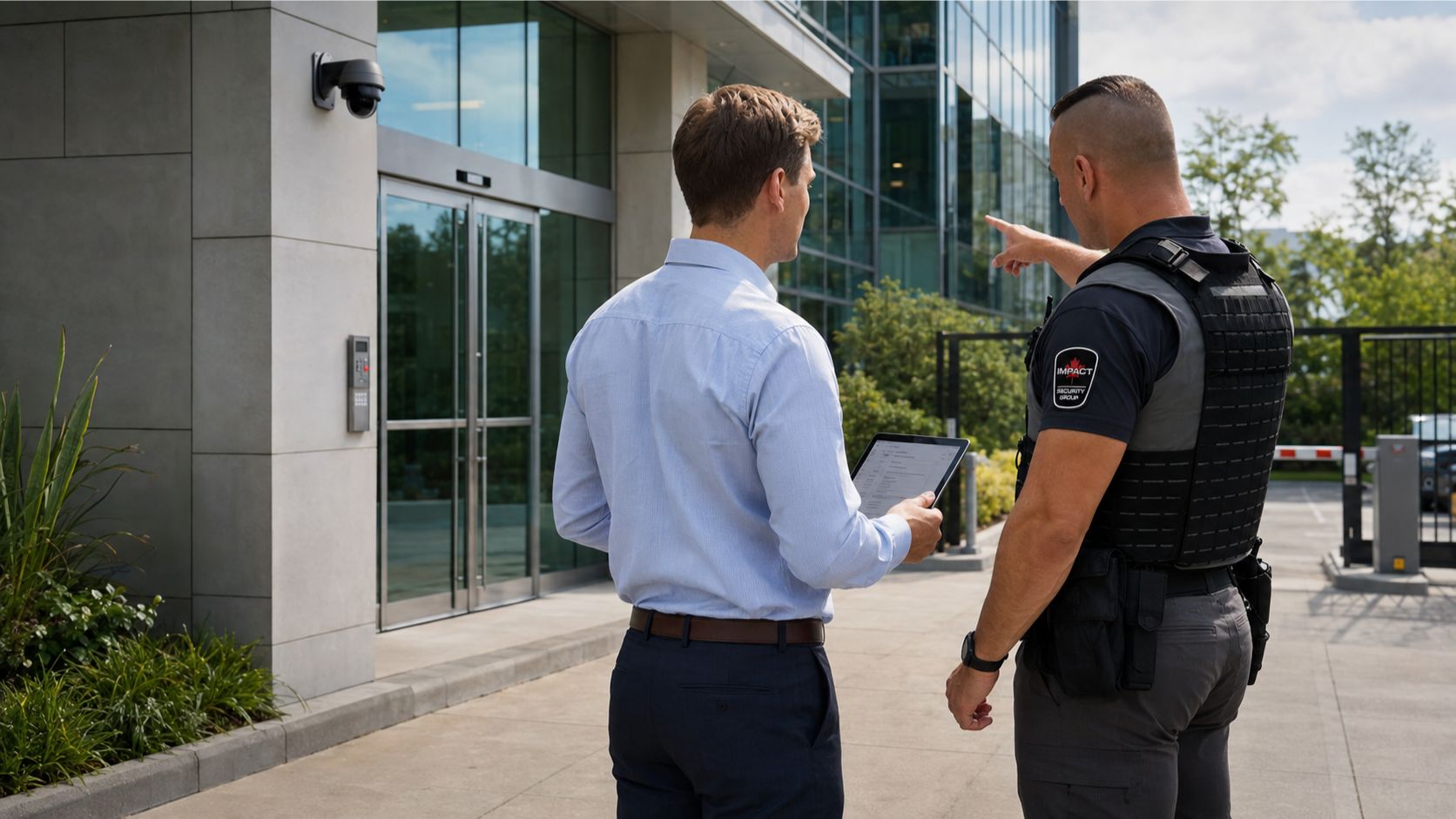
Property managers get the best results and lowest costs by consolidating multiple buildings under one accountable provider and matching coverage to genuine risk hours rather than defaulting to full-time guards everywhere.
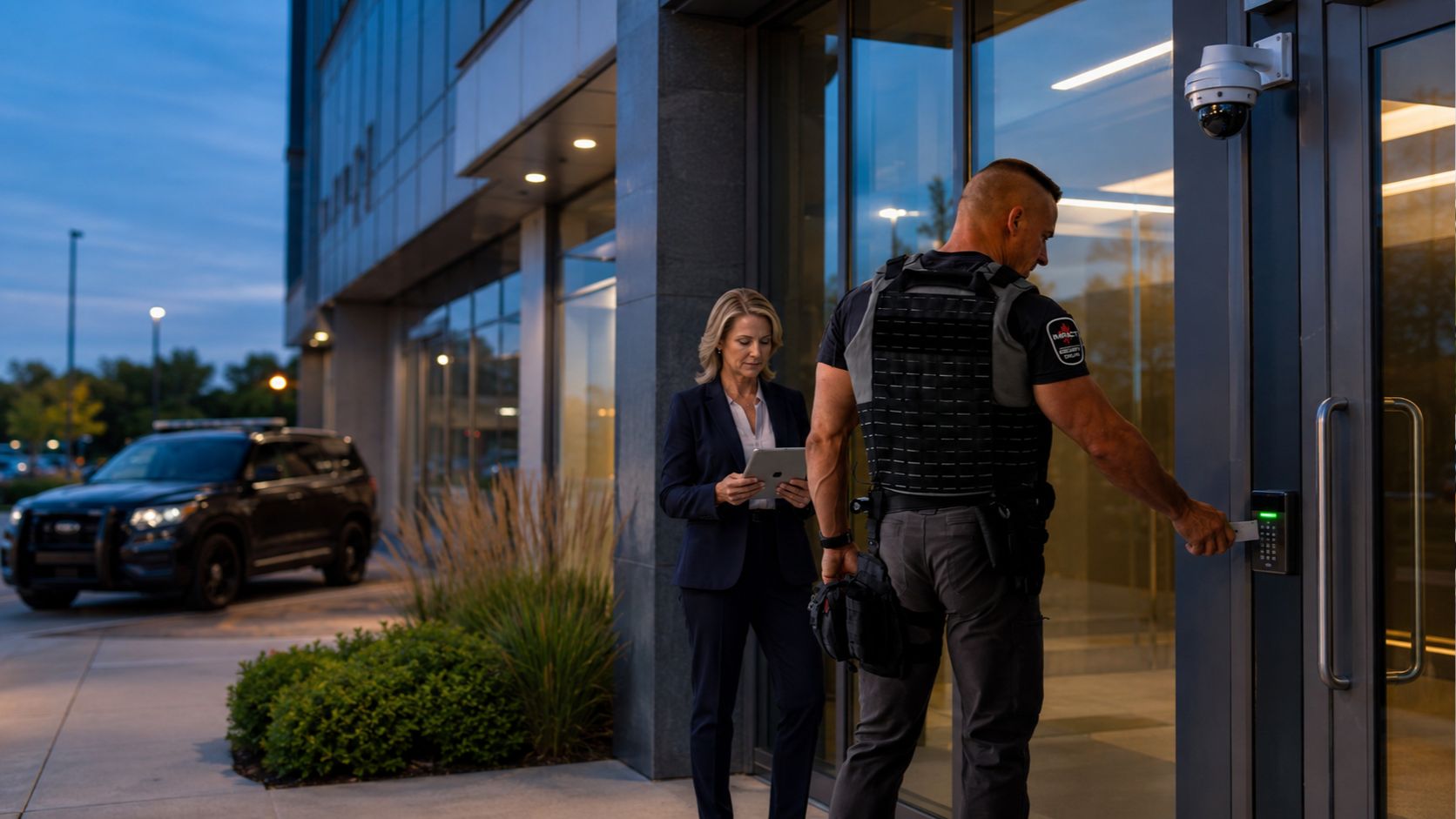
Property managers carry a distinct challenge you're responsible for the safety of buildings you don't personally occupy, often several at once, each with its own tenants, risks, and quirks. Get security right and it's invisible tenants feel safe, incidents stay rare, and liability stays low. Get it wrong and it surfaces as complaints, turnover, insurance problems, and 2 a.m. phone calls. This guide lays out how to get it right.
What security does a commercial or residential building actually need?
Every building's security rests on answering three questions honestly:
Who needs to be kept out, and who let in?
What are the genuine risk hours?
What has to be protected property, people, or both?
The answers vary enormously by property type, which is why a template approach wastes money. Here's how the needs differ.
Security needs by property type
Apartment & condo buildings (multi-residential):
Multi-residential properties are about protecting residents, which raises the stakes. Statistics consistently show buildings without visible security experience significantly more break-ins. The core needs to controlled lobby and entrance access, parkade patrols (a common trouble spot), surveillance of common areas, enforcement of building rules, and a professional response to resident concerns and after-hours incidents. Many buildings use concierge-style security officers who combine front-desk service with security capability, protecting residents without making the building feel like a fortress.
Office & corporate buildings:
Office properties need presentable, professional security that protects without disrupting business. Priorities: access control and visitor management at entrances, front-desk or concierge coverage, after-hours patrols of empty floors and parkades, and alarm response. The security should reflect the building's image polished during business hours, vigilant after them.
Warehouses & industrial sites
These are property-protection challenges with high-value contents and large, hard-to-watch footprints. Priorities, perimeter and yard patrols, access control at gates, verification of deliveries and vehicles, and strong after-hours coverage since the real risk is overnight intrusion and theft. Mobile patrol is often the most cost-effective fit a marked unit checking the perimeter on a randomized schedule deters far more affordably than a full-time guard.
Retail & mixed-use properties
Mixed-use properties layer multiple risk types retail theft by day, intrusion by night, plus parking and common-area management. These benefit most from a blended program a loss-prevention or uniformed presence during retail hours and patrol coverage overnight.
The core building blocks of property security
Access control — managing who enters via staffed screening, automated card systems, or both.
Surveillance (CCTV) — continuous monitoring and evidence, ideally tied to a response plan.
On-site guards or concierge security — for buildings needing constant presence or a professional front desk.
Mobile patrol — cost-effective scheduled and random checks, ideal for after-hours coverage and multi-site portfolios.
Alarm response & key holding — a provider who responds to activations so you don't have to.
Incident reporting — documented records that protect you with tenants, owners, and insurers. The art is combining these to match each property, not installing all of them everywhere.
How property managers control security costs
The biggest cost lever isn't the hourly rate it's matching coverage to genuine risk instead of over-guarding. Here's how the common options compare:
| Approach | Best for | Relative cost | Trade-off |
|---|---|---|---|
| Full-time on-site guard | High-traffic lobbies, high-risk sites | Highest | Overkill for low-activity hours |
| Concierge security | Condos, Class A offices | High | Combines service + security |
| Mobile patrol | After-hours, warehouses, multi-site | Low | Not constant presence |
| Patrol + alarm response | Vacant or low-activity properties | Lowest | Response in minutes, not seconds |
| Blended (guard + patrol) | Mixed-use, variable risk | Moderate | Requires planning |
Two moves consistently save property managers money without sacrificing protection:
Match coverage to risk hours: Pay for on-site presence when activity creates risk (daytime lobbies, retail hours) and switch to patrol checks when the risk is intrusion (overnight). A building rarely needs a stationed guard at 4 a.m. when a patrol and monitored alarm do the job.
Consolidate your portfolio: Putting multiple buildings under one provider gives you volume efficiency, consistent standards, one accountable point of contact, and patrol routes that serve several of your sites on one efficient run.
The liability angle every property manager should understand
Security isn't only about preventing incidents it's about demonstrating you took reasonable care. When something happens on a property you manage, one of the first questions is whether appropriate security measures were in place. Professional, documented security with proper licensing, insurance, and detailed incident reporting is a significant part of your liability protection.
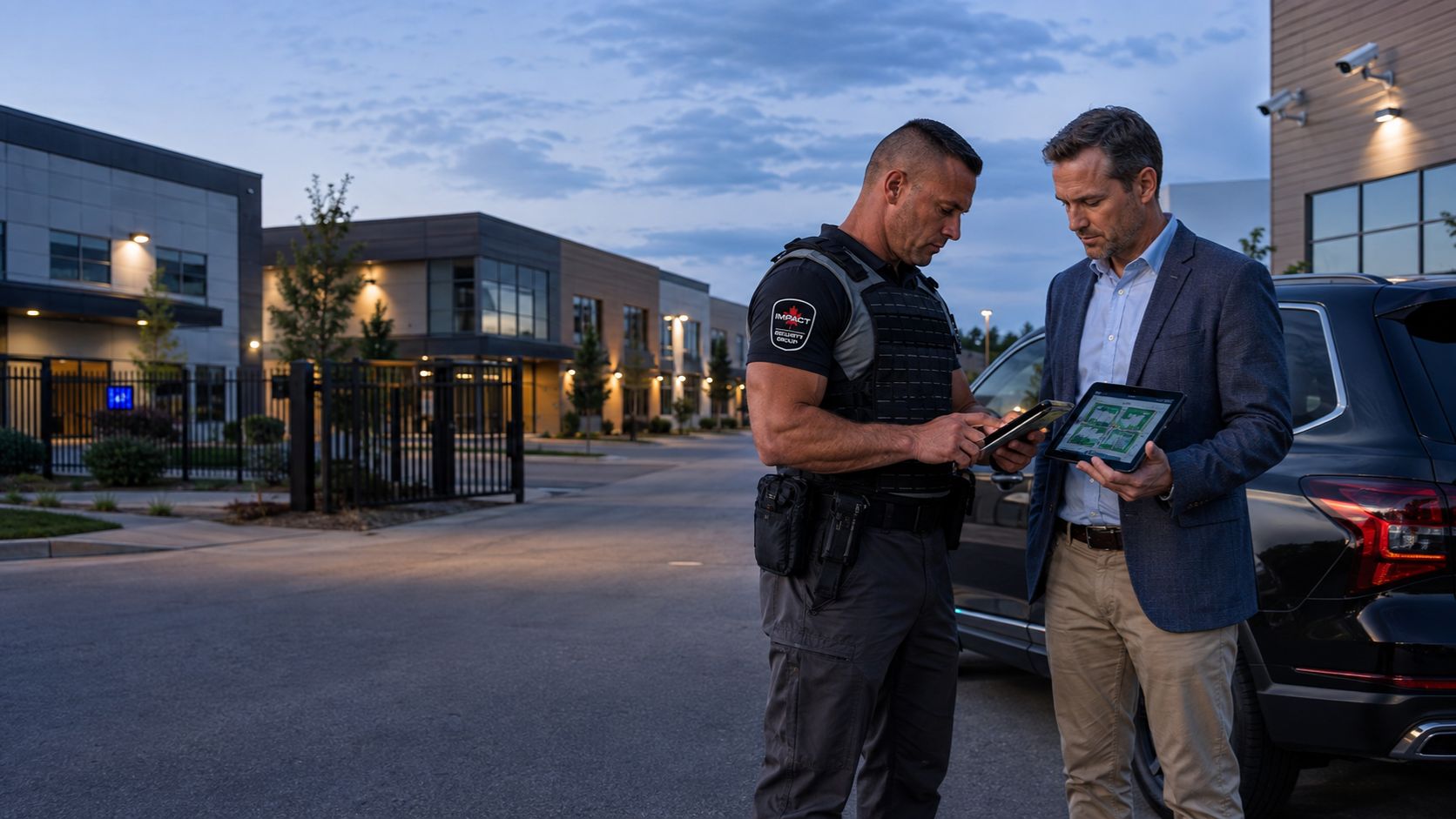
This is why documentation matters as much as presence. A provider who delivers time-stamped patrol logs, professional incident reports, and proof of licensing and insurance gives you the paper trail that protects you with owners, tenants, and insurers. Informal or undocumented security leaves you exposed even when nothing goes wrong.
A simple framework for building your security plan
Assess each property individually — type, risk hours, people vs. property, existing measures.
Separate detection from response — decide where technology suffices and where you need human response.
Match coverage to risk hours — the single biggest cost saver.
Consolidate under one provider — for efficiency, consistency, and accountability across your portfolio.
Insist on documentation — licensing, insurance, and reporting that protect you legally.
Impact Security Group has protected commercial and multi-residential properties across Western Canada since 1999 from condominiums and apartment buildings to office towers, warehouses, and industrial sites. We work with property managers to build portfolio-wide security programs that combine on-site guards, concierge officers, mobile patrol, and access control, all under one accountable local team. Request a free assessment and we'll help you secure your properties effectively, and cost-efficiently.
FAQ
How do property managers handle security across multiple buildings?
How can I reduce security costs for a commercial property without losing protection?
What security does an apartment building need?
How much does security cost for a commercial building?
How can property managers get started with a security plan?