Fire Watch on Short Notice in Edmonton: What to Have Ready When You Call
When you call a provider for short-notice fire watch in Edmonton, have six things ready the property address and building type, the reason fire watch is needed (for example a sprinkler or fire alarm system out of service, or hot work), which zones or areas are affected, the expected start time and likely duration, who can provide site access and act as on-site contact, and any instructions already given by your fire-safety professional or the local fire authority. Having these on hand lets a provider scope the assignment accurately on the first call.
Aug 25, 2026
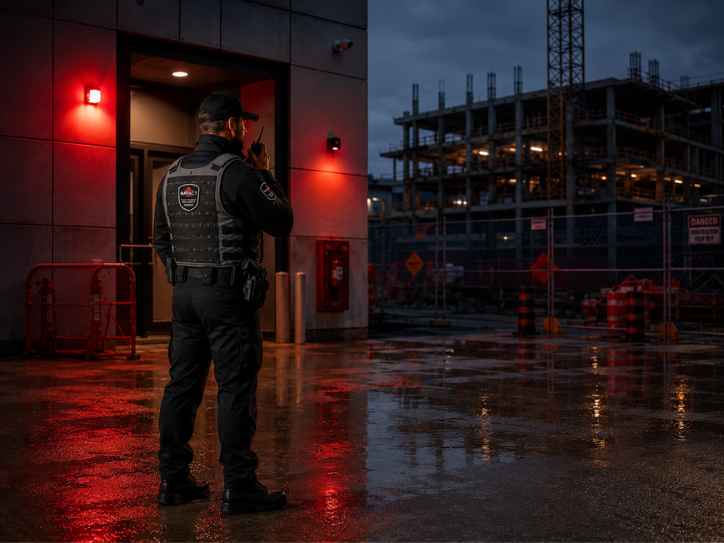
The rest of this guide explains why each detail matters, what happens after you make the call, what commonly slows things down, and the questions worth asking before you commit so an urgent situation gets handled cleanly rather than turning into a scramble.
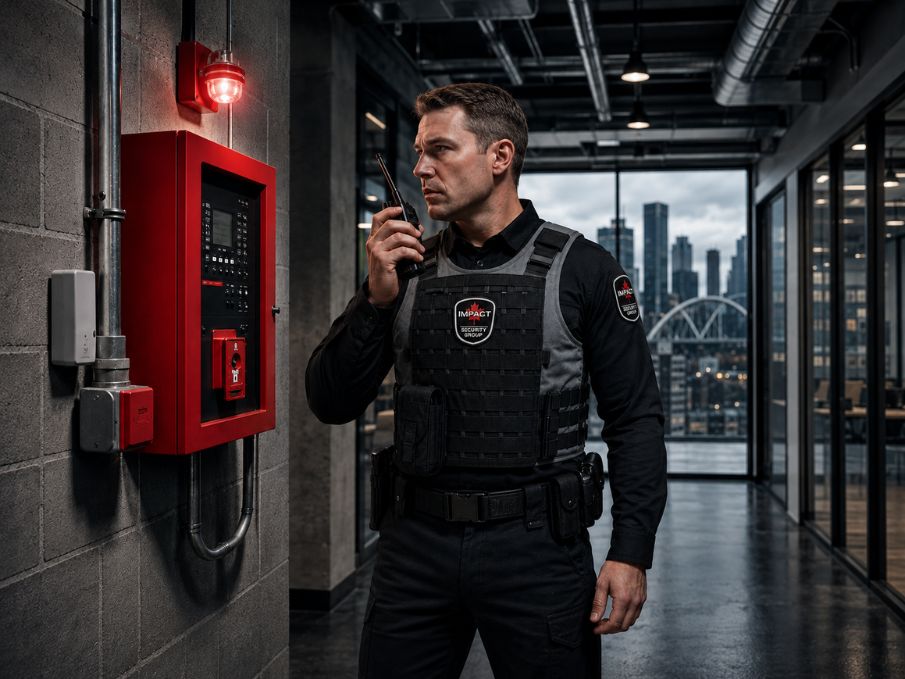
For context, and only briefly, a fire watch is continuous monitoring by dedicated personnel who patrol affected areas, watch for signs of fire, and are ready to alert occupants and call 911 when a building's fire protection systems are impaired or an activity has raised fire risk. If you want the full explanation of what fire watch is and when it applies, see our Fire Watch service page. This article assumes you already know you may need it and focuses on getting you ready to arrange it.
Fire Watch Call-Preparation Checklist
| Information to Prepare | Why the Provider Needs It | What to Confirm |
|---|---|---|
| Property address & access details | To locate the site and plan how personnel get in | Exact address, unit/zone, gate or entry method |
| Building or site type | Commercial, industrial, residential, or construction changes the approach | What the property is and its general size/layout |
| Reason fire watch is needed | Sprinkler impairment, alarm out of service, or hot work each scope differently | The specific trigger, in plain terms |
| Affected zones or areas | In Alberta, only the zones affected by the shutdown require fire watch | Which floors, wings, or systems are impaired |
| Expected start time | To plan staffing and timing | When coverage needs to begin |
| Expected duration (if known) | Coverage continues until systems are restored; duration drives staffing | Estimated repair/restoration timeline, if you have it |
| Areas requiring monitoring | Defines the patrol route and how many personnel are needed | Stairwells, specific floors, high-risk areas |
| Site contact / responsible person | Personnel need someone to coordinate with on arrival | Name and phone number of the on-site contact |
| Operating hours & occupancy | Affects patrol planning and whether the building is occupied | Whether people are present, and when |
| Special hazards or restricted areas | Flammable storage, live construction, restricted zones affect safety | Anything unusual on site |
| Instructions already received | Your fire-safety professional or the AHJ may have set conditions | Any written direction from an inspector or engineer |
| Reporting expectations | Clarifies what documentation you need back | Whether you need logs for an insurer or the AHJ |
Why preparing the right information matters
Complete information lets a provider understand the assignment on the first conversation instead of the third. When you can describe the site, the trigger, the affected zones, the timing, and the access arrangements, a provider can quickly gauge the scope, the likely staffing requirement, the patrol area, and the reporting you'll need the exact inputs that turn a vague enquiry into a plannable assignment.
The Alberta regulator's guidance makes clear why some of these details matter operationally. Under the National Fire Code 2019 Alberta Edition, fire watch personnel must be able to make at least one complete patrol of the area to be protected, including stairwells, every 60 minutes or less, depending on the risk and the requirements of the authority having jurisdiction. That single rule means the size and layout of your affected area directly shape how many people are needed and how the patrol is planned, which is exactly why "which zones are affected" is a question you'll be asked early.
A practical note: Preparing this information helps a provider respond efficiently, but it does not by itself guarantee immediate deployment. Availability depends on the provider and the circumstances. What preparation reliably does is remove the delays that come from missing details.
What information should you have ready before calling?
Property and site information
Have the exact address, the building or site type, and a basic sense of size and layout ready. A downtown Edmonton office tower, a suburban retail unit, an industrial warehouse, and an active construction site are four different assignments. The property type shapes access, patrol routing, and the kind of hazards personnel should watch for, so naming it precisely saves a round of questions.
What has changed at the property?
State the reason clearly: a sprinkler system taken out of service for repair, a fire alarm panel that failed inspection, planned maintenance on a suppression system, or hot work such as welding or cutting. The Alberta Safety Codes Council notes that interruptions requiring alternative measures include periodic inspection or testing, maintenance, and repairs of the fire alarm or sprinkler systems. The specific trigger determines how the fire watch is scoped, so describe what actually happened rather than just "we need a guard."
Areas that may require monitoring
Identify which zones are affected. This matters more than many buyers expect, because in Alberta the requirement is targeted: the Safety Codes Council states that only those zones or areas affected by the shutdown or that are inoperative are required to have fire watch. Knowing whether the impairment affects one wing, one floor, or the whole building lets a provider plan an accurate patrol route and staffing level instead of over- or under-scoping.
Timing and expected duration
Have your expected start time ready and your best estimate of how long coverage will be needed. Duration is often tied to a repair or restoration timeline, the fire watch generally continues until the fire alarm or sprinkler system is fully operational. If your contractor has given you a restoration estimate, share it; it directly affects how the provider plans shifts and continuity.
Site access and contact information
Confirm how personnel will physically get on site and who they'll coordinate with. Have the name and phone number of a responsible on-site contact, plus the entry method, a key, a code, a gate, or someone meeting them at the door. Access gaps are one of the most common causes of avoidable delay, so sorting this out before you call is worth the two minutes it takes.
Existing instructions or safety procedures
If a fire-safety professional, building engineer, or an inspector from the local authority having jurisdiction has already given you direction, have it ready ideally in writing. The Alberta guidance emphasises that alternative measures should be developed with the local fire department or authority having jurisdiction. Any conditions they've already set will shape the fire watch, so passing them along early keeps everyone aligned.
Reporting and communication expectations
Clarify what documentation you'll need back. A fire watch involves maintaining a tracked patrol record, and you may need those logs for your insurer or for the fire authority. Alberta's requirements specify that a process shall be in place to track the patrol route and that personnel must have a reliable means of contacting 911. Knowing in advance whether you need formal daily logs or interim updates helps set up reporting correctly from the start.
What happens after you contact a Fire Watch Provider?
- 1. Initial discussion — you describe the situation and the provider gathers the details from the checklist above.
- 2. Requirement clarification — the provider confirms the affected zones, timing, access, and any AHJ instructions.
- 3. Site or scope review — where appropriate and time permits, the provider reviews the site or its layout to plan the patrol.
- 4. Service planning — the patrol route, coverage hours, and personnel count are worked out based on the affected area.
- 5. Staffing and deployment discussion — the provider confirms what coverage they can arrange and when.
- 6. Site instructions — the provider briefs personnel on the route, hazards, and emergency procedures for your site.
- 7. Reporting and communication — you agree on how patrol records and any incidents will be documented and shared.
- 8. Ongoing review — for longer coverage, arrangements are reviewed as the situation changes or the system is restored.
The more of the early steps you can support with prepared information, the faster the process reaches deployment planning.
What can delay short-notice Fire Watch Arrangements?
Most delays come from missing information rather than provider availability. Common causes, framed so you can pre-empt them:
- Incomplete property information — an unclear address, building type, or layout slows accurate scoping.
- Unclear monitoring areas — if it's uncertain which zones are affected, the patrol and staffing can't be finalised.
- Inaccessible site areas — no key, code, or on-site contact can stall arrival even when personnel are available.
- Missing responsible contact — with no one to coordinate on site, personnel may be left waiting.
- Uncertain start or end times — vague timing makes continuous coverage harder to plan.
- Unclear site procedures — missing emergency or fire-safety plan details for the affected area slow the briefing.
- Incomplete authority or building instructions — if the AHJ set conditions that aren't passed along, the scope may need reworking.
None of these apply to every situation. The point is simply that each one is avoidable with a little preparation, and together they're the difference between a smooth arrangement and a frustrating one.
Questions to ask a Fire Watch Security Provider
- Availability — Can you cover the hours and duration I need, and when could coverage begin?
- Scope — How will you determine the patrol route and staffing for my affected zones?
- Personnel — Are your fire watch personnel licensed and trained for this role in Alberta?
- Supervision — Who supervises the personnel and how are shifts managed for longer coverage?
- Documentation — What patrol records and reports will I receive, and in what format?
- Communication — How will I be kept informed, and how are incidents escalated?
- Site instructions — How do you brief personnel on my site's hazards and emergency procedures?
- Pricing structure — How is the service priced, and what drives the cost?
- Contract terms — What are the terms, and how does coverage end when my system is restored?
These are questions any buyer should be able to ask. The quality and directness of the answers tell you a lot about how an assignment will actually run.
Fire Watch for Commercial Properties vs Construction Sites
| Consideration | Commercial building | Construction site |
|---|---|---|
| Typical trigger | Alarm/sprinkler impairment | Hot work, systems not yet active |
| Access | Building entry, occupancy | Site gates, multiple entry points |
| Key detail to prepare | Affected zones, occupancy | Current phase, hot work, materials |
| Patrol focus | Impaired zones, stairwells | Work areas, storage, perimeter |
Both are covered by the same underlying Alberta requirements; what changes is the information you should have ready to describe the environment accurately.
Edmonton-Specific Fire Watch Considerations
Fire watch obligations in Edmonton flow from the National Fire Code 2019 Alberta Edition, enforced locally by the authority having jurisdiction for most Edmonton properties, that's Edmonton Fire Rescue Services. A few points genuinely specific to operating here:

The AHJ is your reference point: Alberta's guidance is explicit that alternative measures should be developed with the local fire department or authority having jurisdiction and directs building owners to contact the local Authority Having Jurisdiction for any questions. If an Edmonton Fire Rescue Services inspector has given you direction, that direction governs have it ready.
Coverage is zone-specific: Under the Alberta edition, only the affected zones require fire watch, so accurately identifying the impaired area for your specific Edmonton building keeps the arrangement correctly scoped.
Patrol frequency is defined: The province's requirement of a complete patrol every 60 minutes or less, depending on the risk and the requirements of the AHJ, applies here, worth knowing when you plan around a larger or multi-story Edmonton property.
Fire watch is short-term by design: Alberta's guidance frames it as only a short-term alternative that permits continued occupancy, pending correction of the underlying system. Plan your repair timeline alongside the fire watch, not after it.
For questions specific to your property, the local fire authority is the definitive source. This article is general guidance, not legal or code advice, and requirements can vary with your circumstances and what the AHJ directs.
What to have ready: Final checklist
- 1. Property address and building/site type
- 2. The reason fire watch is needed
- 3. Which zones or areas are affected
- 4. Expected start time
- 5. Expected duration, if known
- 6. On-site contact name and phone number
- 7. How personnel will access the site
- 8. Any instructions from your fire-safety professional or the AHJ
- 9. Special hazards or restricted areas
- 10. What reporting you'll need back
With these ready, one phone call is usually enough to scope the assignment.
If you're facing an impairment or hot work at an Edmonton property and want to talk it through, contact Impact Security Group to discuss your fire watch requirement. Share the details above and our team can work through scope, coverage, and next steps with you.
FAQs
How quickly can fire watch security be arranged in Edmonton?
What information does a fire watch provider need?
Can fire watch be arranged for a construction site?
Can fire watch be arranged for a commercial building?
How long does fire watch coverage last?
Does fire watch require documentation?
What should I ask when comparing fire watch providers?