How Construction-Site Security Risk Changes Across the Project Lifecycle
A construction site's security risk is not fixed, it moves as the project moves. In early phases, the main exposure is an open, loosely fenced site with little on it. As work progresses, high-value equipment and materials arrive, the workforce grows, deliveries multiply, and access points shift. Later, the building encloses, interior fixtures appear, and access control changes character again. Because these conditions change, a security plan set at mobilization is often outdated by mid-project. The practical takeaway is to review the plan as the site changes, not just once at the start.
Aug 25, 2026
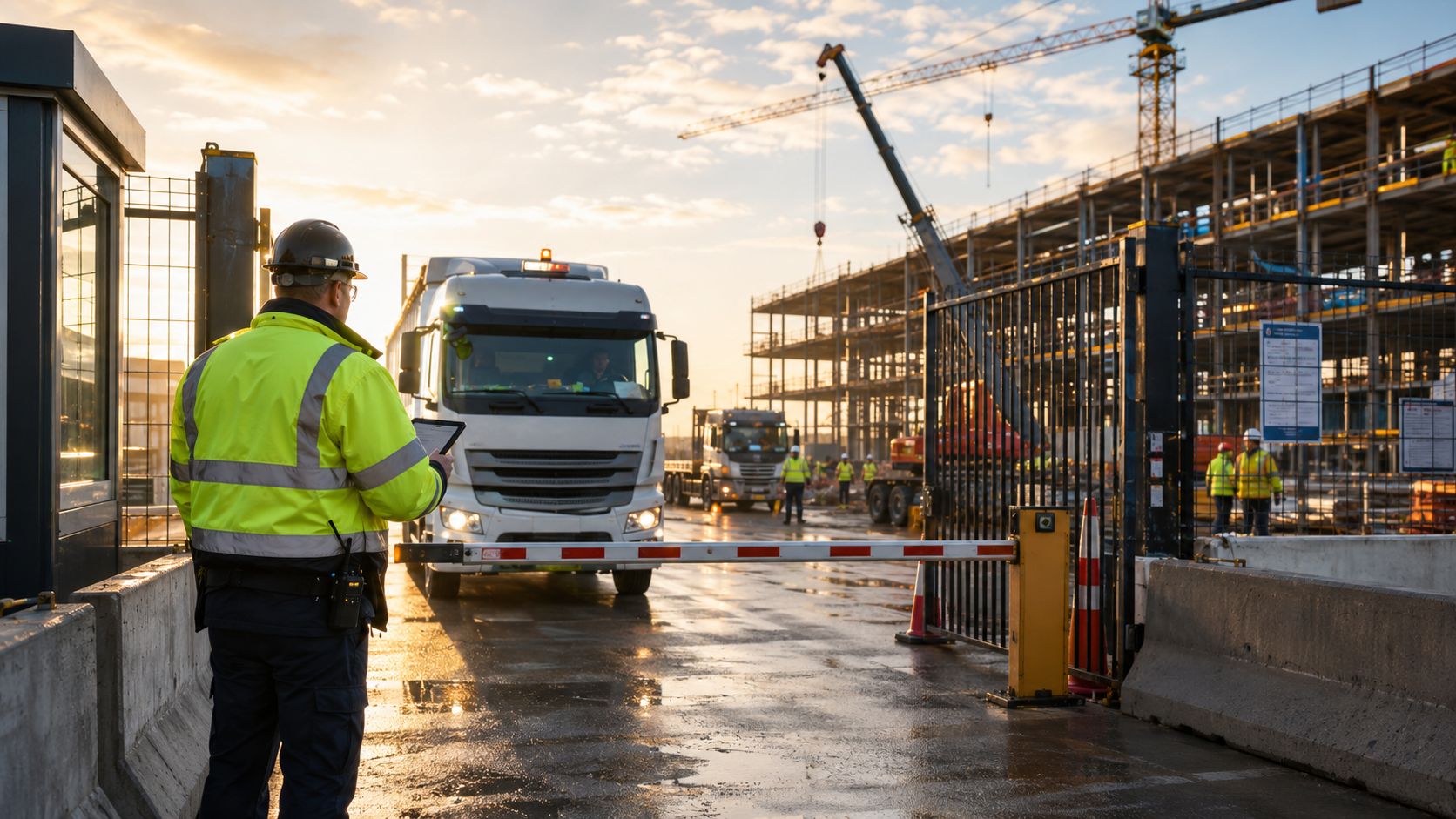
That reframing matters because most construction security is bought and forgotten. A contractor arranges coverage at the beginning, then leaves it untouched while the site underneath it transforms completely. The result is a plan calibrated for a risk profile that no longer exists, guards patrolling a perimeter that has moved, checkpoints that no longer match where the valuable assets sit, reporting that captures the wrong things.
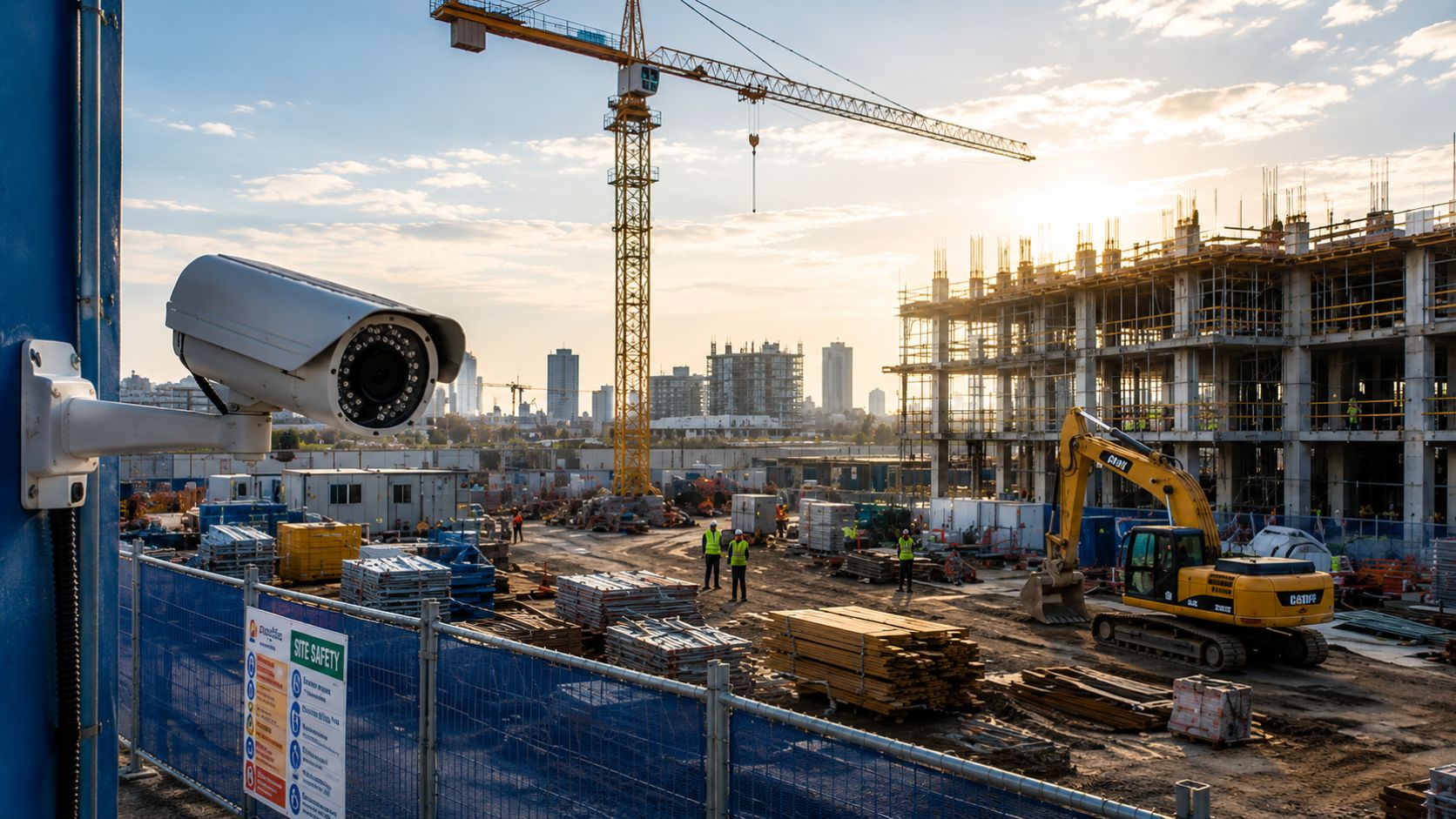
To put the stakes in context, construction theft is a persistent and costly problem in Canada. Aviva Canada reports that roughly $46 million in equipment is stolen annually across the country, with $15 to $20 million of those losses in Ontario alone, and notes that only about 25% of stolen equipment is ever recovered. Northbridge Insurance cites a similar national figure of about $46 million for 2024. The direct loss is only part of it, replacement lead times, rental costs, insurance premium increases, and project delays typically cost more than the stolen item itself. A security plan that keeps pace with the project is one of the more direct ways to manage that exposure.
This article walks through the project lifecycle phase by phase, using the same four questions each time, so the pattern is easy to follow and easy to apply to your own site.
The four questions to ask at every stage
1. What changes on site at this stage?
2. Which security questions become more important?
3. What should the project team reassess?
4. What records or indicators should management review?
Security risk on a construction site is not one big question answered once, it's the same set of questions, re-answered as conditions change. This consistency is the point.
- People : who is on site, and how has the population changed?
- Access: where are the entry points, and who controls them?
- Assets : what's on site worth stealing or damaging, and where is it concentrated?
- Layout : how has the physical site changed?
- Hours : when is the site active, and when does it sit unattended?
- Incidents : what has actually happened, and what does it signal?
- Reporting : does the documentation still capture what management needs?
Stage 1 : Mobilization
What changes: the site goes from empty ground to an established work area. A perimeter and temporary fencing go up, a site trailer or office arrives, initial plant and equipment are delivered, and the first crews and contractors begin arriving.
Which security questions matter most: Is the perimeter actually established and continuous, or are there gaps? How is temporary access controlled while the site is still taking shape? Who is authorized to be here at this early stage, when the "everyone knows everyone" assumption hasn't yet broken down?
What to reassess: perimeter integrity, the single controlled entry point (rather than several informal ones), and a baseline record of who and what is on site.
What management should review: the initial site setup against the security plan confirming the plan reflects the site as actually built, not as drawn.
Mobilization is deceptively low-risk because there's little to steal yet. But it's the phase that sets the habits — access discipline, logging, and perimeter control that either hold or fail for the rest of the project.
Stage 2 : Deliveries and Early Site Activity
What changes: delivery volume climbs. Materials arrive on schedules that don't always align, vendor and subcontractor vehicles come and go, and temporary material storage appears before permanent storage arrangements exist.
Which security questions matter most: Are deliveries verified against what was actually ordered? Is gate activity logged? Can the site tell an authorized delivery from an opportunistic one? Early materials lumber, copper, fittings are attractive and easy to move, and they often sit in the open before secure storage exists.
What to reassess: gate management and delivery verification, credentialing for vendors and subcontractors, and where early materials are being staged.
What to reassess: gate management and delivery verification, credentialing for vendors and subcontractors, and where early materials are being staged.
Access and delivery control at this phase is a substantial topic in its own right. The key phase-level point is that "Access" and "Assets" have both shifted, so both deserve a fresh look.
Stage 3 : Active Construction
What changes: this is the busiest phase and the most fluid. The workforce peaks, multiple subcontractors work simultaneously, vehicle traffic is heavy, access points may shift as work moves around the site, and tools and equipment are in constant use across changing work areas.
Which security questions matter most: With a large, rotating population, how is authorized access actually verified day to day? As work areas move, do the patrol routes and checkpoints still match where activity and assets are? Are tools being secured at the end of shifts or left in place because the site feels busy and safe?
What to reassess: access verification under peak headcount, patrol routing against the current work areas, and end-of-shift securing of tools and equipment.
What management should review: incident and exception reports, and whether patrol checkpoints still reflect the live site rather than the site as it was two phases ago.
The risk here isn't a single dramatic exposure, it's drift. The site changes faster than the security plan, and small mismatches accumulate.
Stage 4: Equipment and Material Storage
What changes: asset concentration increases. Heavy equipment, expensive materials, and finished components are now on site in quantity, often staged in laydown areas or secured compounds, and frequently left unattended overnight and on weekends.
What to reassess: patrol emphasis on high-value storage areas, coverage during the unattended windows (overnight, weekends, holidays), and whether laydown and compound locations are positioned and controlled sensibly.
What management should review: what's on-site versus what the plan protects, and any pattern in when and where losses or near-misses occur.
This is a phase-level reassessment: value has concentrated, the unattended hours are when it's exposed, and the plan should follow the value. Recovery rates for stolen equipment are low, Aviva Canada puts recovery at about 25% which makes prevention during this phase disproportionately worthwhile.
Stage 5: When the Building Becomes Enclosed
What changes: this is a genuine inflection point that many security plans miss. Once the building envelope closes , walls, roof, and secured exterior doors, the security problem moves partly indoors. Exterior access becomes more controllable, but now there are interior rooms, installed fixtures and equipment, and mechanical and electrical components going in. Keys and access credentials start to matter. Workers operate in defined interior areas rather than open ground.
Which security questions matter most: Who holds keys and access credentials to the enclosed structure, and is that controlled? As valuable fixtures and building systems are installed inside, are interior areas monitored, not just the perimeter? Does the patrol still work when the "site" is increasingly a building with rooms and doors?
What to reassess: key and credential control, interior patrol coverage, and protection of installed fixtures, appliances, and mechanical/electrical equipment items that are now valuable, in place, and expensive to replace or reinstall.
What management should review: who has been issued keys or codes, and whether reporting now covers interior areas and installed assets.
Enclosure is where the nature of the risk changes most, not just its level. A plan built around perimeter patrol of an open site can quietly become mismatched the week the building locks up. This is one of the phases most worth a deliberate review.
Stage 6: Completion and Handover
What changes: the site transitions from construction to a finished asset. Trades finish and leave, but some contractors still need entry for deficiencies and commissioning. Valuable finishes, appliances, and systems are now fully installed. Control of access begins moving from the contractor toward the owner or operator, and building systems shift toward permanent operation.
Which security questions matter most: Who currently controls access, and is that clear during a period when responsibility is changing hands? Which contractors still legitimately need entry, and how is that distinguished from everyone else? Now that expensive finishes and equipment are installed and the site is quieter, is it still adequately watched?
What to reassess: access control during the handover period, the shrinking list of who legitimately needs entry, and how temporary construction-security procedures should wind down or convert to permanent building security.
What management should review: access records during handover, and a clear point at which security responsibility formally transfers.
Handover carries a specific, under-appreciated risk: activity drops, attention drops, but the value on site is at its highest. We won't speculate on the formal contractual division of responsibility during handover that varies by project and contract but from a pure risk standpoint, the quiet, fully-fitted building is an exposure worth planning for.
7: The Vacant or Transitional Period
What changes: between construction completion and full occupancy, a building can sit largely empty while holding maximum value — installed finishes, appliances, mechanical and electrical systems, sometimes furnishings. Construction activity has stopped, but occupants haven't arrived.
Which security questions matter most: Who is responsible for security now that the contractor's active involvement has ended? A vacant, finished building faces different risks than an active site — not just theft of remaining valuables, but vandalism, unauthorized entry, and undetected issues like water damage. Is anyone actually watching it?
What to reassess: whether coverage continues through the vacancy, what type of coverage fits an empty finished building (patrol checks, alarm response, or a presence), and who holds responsibility during the gap.
What management should review: confirmation that the property hasn't fallen into a coverage gap during the transition, and a plan for the vacant period specifically.
This transitional gap is one of the most common places for security to lapse, precisely because it falls between two owners of the problem.
When Should a Construction Security Plan Be Reviewed?
Direct answer: review the security plan whenever the site materially changes — not on a fixed calendar. The useful signals are change triggers, not dates. Review the plan when any of these occur:
- The project enters a new stage (mobilization , active build, enclosure, handover, vacancy).
- Access points materially change, gates move, entrances open or close, credentials change.
- Work hours change, new shift patterns, or new unattended windows.
- Asset concentration changes,significant new equipment or high-value materials arrive.
- The building becomes enclosed, shifting risk indoors.
- Occupancy or activity drops, the site goes quiet while value remains.
- The contractor population changes, a major sub finishes, or a new one mobilizes.
- Incident patterns change, repeat losses, near-misses, or exceptions cluster in a location or time.
Each of these maps to one or more factors in the Construction Security Phase Review. When a trigger fires, you don't necessarily re-plan everything everything;you check which factors moved and adjust accordingly.
The Construction Security Phase-Change Checklist
Use this at each phase transition, or whenever a change trigger fires:
- What changed on site since the previous stage or review?
- Who now enters the site has the workforce or contractor population shifted?
- Where is value concentrated now and which areas are highest-value or most vulnerable?
- Have access points changed new gates, closed entrances, moved routes?
- Have operating hours changed new shifts, new unattended windows?
- Which areas are unattended, and when?
- What incidents or exceptions occurred, and what do they suggest?
- Do patrol points still match current site conditions and where the value sits?
- Does reporting still capture the information management actually needs?
- Do site instructions or post orders need updating to reflect the current site?
If several boxes go unchecked, the security plan is likely running behind the site.
Which Construction stage Needs the Most Security?
There isn't a single universally "most dangerous" stage the honest answer is that the nature of the risk changes rather than simply peaking once. That said, two phases deserve particular attention: the equipment and material storage phase, when asset value on site is high and much of it sits unattended, and the completion/vacant transition, when value is at its maximum but activity and oversight drop. The point of the phase-review approach is precisely to avoid assuming risk is constant, and to put attention where the current conditions call for it.
The Construction Security Phase-Change Checklist above is designed to be copied and used at each phase transition on your own projects. To go deeper, see our guide on setting patrol frequency by risk. And if you'd like to understand how construction security services can be structured to adapt as a project moves through these phases, our construction security team is happy to talk it through.
Construction Security Lifecycle Risk Matrix
| Project Phase | What Changes on Site | Main Security Questions | Controls to Reassess | Evidence / Reporting to Review |
|---|---|---|---|---|
| 1. Mobilization | Perimeter set up, site office, first crews arrive | Is the perimeter continuous? Who's authorized this early? | Perimeter integrity; single controlled entry; baseline access record | Setup vs. plan; initial access log |
| 2. Deliveries / early activity | Delivery volume rises, vendor traffic, and early materials staged | Are deliveries verified? Is gate activity logged? | Gate management; delivery verification; vendor credentials | Delivery & access logs for anomalies |
| 3. Active construction | Peak workforce, multiple subs, shifting work areas | Is access verified at scale? Do patrols match current work areas? | Access verification; patrol routing; end-of-shift tool securing | Incident/exception reports; checkpoint accuracy |
| 4. Equipment / material storage | Asset value concentrates, items unattended overnight | Where is value now? What's exposed and for how long? | Patrol emphasis on high-value areas; unattended-hours coverage | On-site value vs. protected value; loss/near-miss patterns |
| 5. Building enclosed | Envelope closes, and the interiors, fixtures, and keys appear | Who holds keys/credentials? Are interiors monitored? | Key/credential control; interior patrol; fixture protection | Key issuance records; interior-area reporting |
| 6. Completion / handover | Trades leave, finishes installed, access shifts to owner | Who controls access now? Who still needs entry? | Handover access control; entry list; procedure wind-down | Handover access records; responsibility transfer point |
| 7. Vacant / transitiona | Finished building sits empty, max value, min activity | Who's responsible now? Is anyone watching? | Continued coverage type; vacancy-specific plan | Confirmation of no coverage gap |
Note: this matrix describes how the nature of risk changes across phases; it deliberately avoids single "high/low" labels because the type of exposure, not just its size is what shifts.
FAQs
How often should a construction security plan be reviewed?
When should security coverage change during a construction project?
How do access-control needs change as construction progresses?
Should patrol checkpoints change during a construction project?
What should project managers review after a security incident?
How should security planning change before site handover?
Do construction sites need different security at different stages?