How to Choose a Security Company in Canada: 9 Things to Check Before You Sign
The security industry has a dirty little secret: the barrier to entry is low. A licence, some liability insurance, a handful of guards, and a company can bid on your contract next to firms with decades of infrastructure behind them. On paper, the quotes look similar. The service behind them is not.
Jul 22, 2026
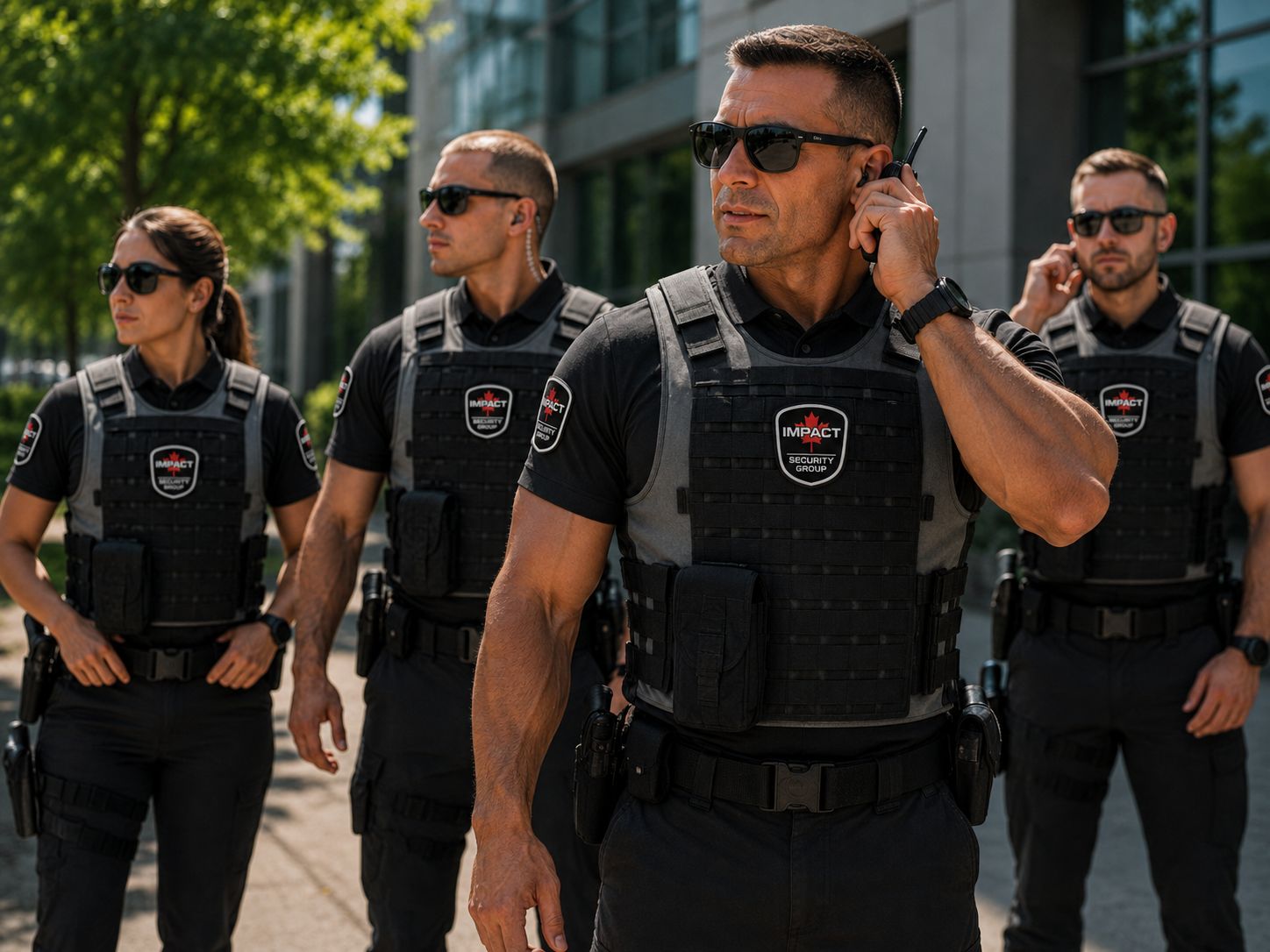
We've spent more than 25 years in this industry, and a meaningful share of our new clients arrive the same way: something went wrong with the last provider. Guards who didn't show. Reports that didn't exist. A phone number that rang a call centre three provinces away. Almost every one of those situations was preventable with better questions at the start.
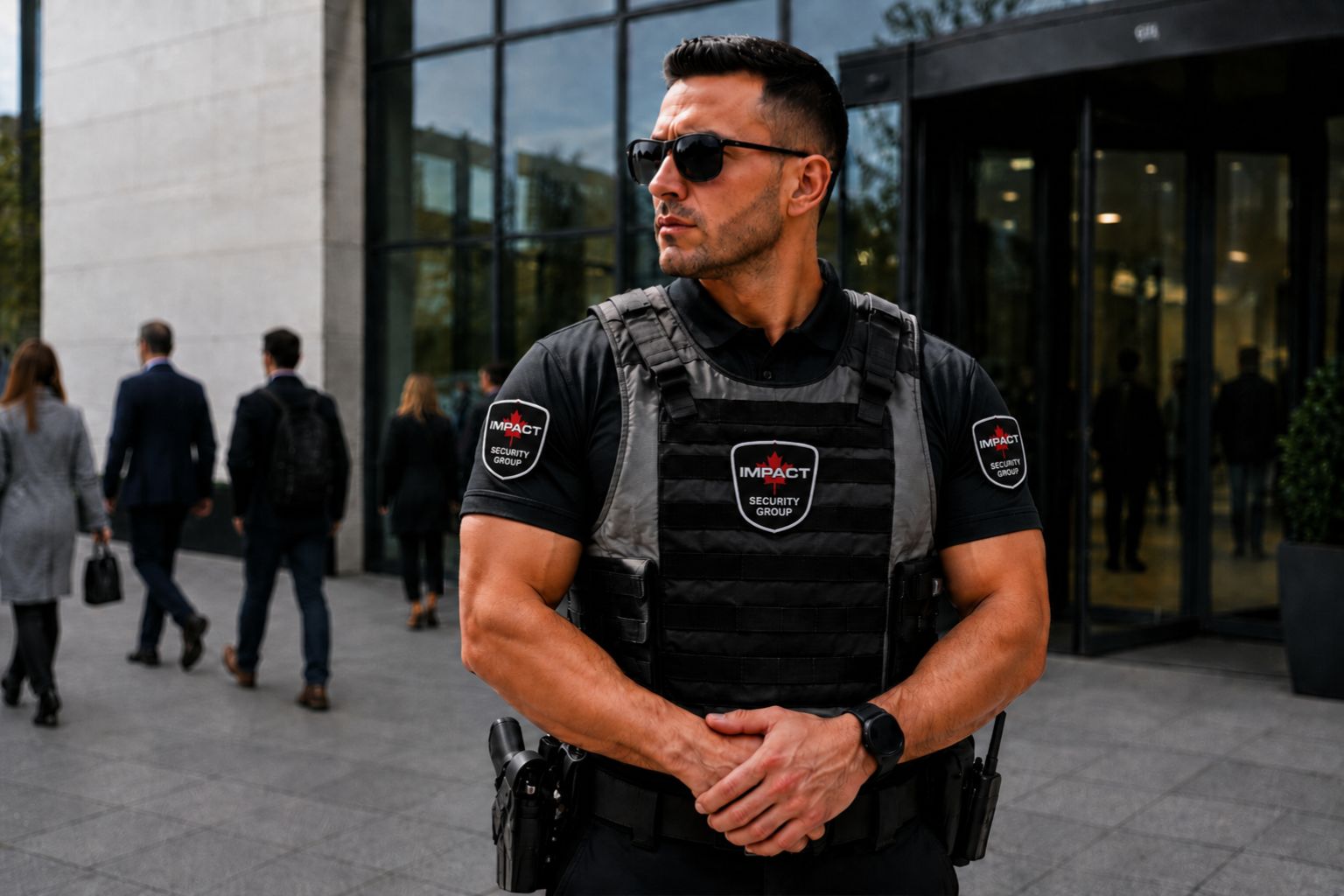
So here they are, the nine checks we'd run on any security company in Canada, including ours. Some take five minutes. All of them are cheaper than finding out the hard way.
1. Verify the licence, not the claim of one
Every province regulates private security separately: Manitoba under the Private Investigators and Security Guards Act, Alberta under the Security Services and Investigators Act, and equivalents elsewhere. Both the company and every individual guard must hold valid provincial licences. Don't accept we're fully licensed as an answer; ask for the business licence number and check it against the provincial registry, which in most provinces is searchable online. A legitimate company will volunteer this before you ask. Hesitation here ends the conversation.
2. Ask for proof of insurance, and read the number
Commercial general liability is what stands between an incident on your property and your own balance sheet. Ask for a certificate of insurance naming the coverage amount, established firms carry substantial CGL policies, and reputable ones will add you as an additional insured on request. While you're at it, confirm WCB coverage for the guards themselves. If a guard is injured on your site and their employer's coverage is deficient, you do not want to discover that afterward.
3. Look past licensing to actual training
Provincial licensing training is a floor, typically a basic course measured in hours, not weeks. The question that separates providers is what sits on top of it. Ask specifically, what training do your guards receive in de-escalation, use of force, first aid, and report writing? Is site-specific training documented before a guard works my property? Who delivers refresher training, and how often? Companies that invest in training will answer in specifics. Companies that don't will answer in adjectives.
4. Find out who actually manages your account
When something goes sideways at 2 a.m. on a long weekend, whose phone rings, and how far away are they sleeping? Local management is the single most underrated factor in security service quality. A company with a real office and real supervisors in your city can spot-check guards, respond to escalations, and sit across a table from you when something needs fixing. A national brand routing you through a call centre can log a ticket. Ask to meet the person who will supervise your account before you sign, not after.
5. Interrogate the response capability
If your service includes alarm response or emergency support, the marketing phrase rapid response deserves numbers. From which location do units dispatch to your address? How many vehicles cover your area overnight? What was the average response time to comparable sites last quarter? A provider with genuine route density near you will have answers; a provider stretching to win a contract outside their footprint will have assurances. There's a difference, and at 2 a.m. it's measured in minutes.
6. Demand transparent, verifiable reporting
Modern security services produce a data trail, GPS-verified patrol checkpoints, digital incident reports with photos, daily activity logs you can access without asking. Ask to see a sample incident report from a real (anonymized) event. A thorough, literate, time-stamped report tells you the company trains its people and audits its work. A vague paragraph tells you what your file will look like when you need evidence for an insurance claim and it isn't there.
7. Check references that resemble you
Every company has three happy clients on speed dial. Make the exercise useful by asking for references in your industry and roughly your size, then ask those references the sharp questions: What happens when a guard calls in sick? Have you had a billing dispute, and how was it handled? Has service quality drifted since the first six months? Long client relationships are the strongest signal in this industry; retention is hard to fake. When a provider can point to partnerships running ten, fifteen, twenty-plus years, that longevity is telling you something no sales deck can.
8. Read the contract for flexibility, not just price
Security needs change: construction phases end, retail seasons spike, a rash of break-ins passes. Your contract should let coverage scale without punitive penalties. Watch for long lock-in terms with steep exit costs, vague scope language that turns every adjustment into a change order, and automatic renewals with narrow cancellation windows. A confident provider doesn't need to trap you; the service is the retention strategy. Month-to-month or reasonable-notice terms are increasingly standard in the Canadian market, and you're entitled to ask for them.
9. Match specialization to your actual risk
A firm that's excellent at corporate concierge work may have never run a construction site, and vice versa. Ask what share of the provider's current business is in your category, and what their guards are specifically trained for in that setting: loss prevention law for retail, fire watch procedure for construction, crowd dynamics for events. Broad companies can be genuinely strong across categories, but only if each vertical has real depth behind it, dedicated training, experienced supervisors, and an actual track record you can check.
How the suspiciously low bid is built
It helps to understand the mechanics, because the low bid isn't magic, it's subtraction. Guard wages get pushed to the legal floor, which guarantees turnover, which guarantees your site is staffed by whoever is newest. Supervision gets cut, so nobody checks whether the work is happening. Training becomes the provincial minimum and nothing more. Insurance gets thinned. Sometimes the roster quietly fills with subcontracted labour the bidding company has never met.
Every one of those subtractions is invisible in the proposal and visible on your property within ninety days. High turnover shows up as strangers who don't know your site. Missing supervision shows up as patrol logs that read suspiciously identical night after night. When you understand where the discount comes from, the question stops being why is this quote so low and becomes which of these corners am I comfortable having cut on my property. Usually the answer is none of them.
One practical addition: if you do switch providers, plan the transition like it matters. Overlap the outgoing and incoming teams by at least a shift cycle, hand over keys, codes, and post orders formally, and have the new provider re-document the site rather than inheriting stale instructions. Most transition failures aren't the new company's incompetence; they're information that never made the jump.
Red flags that should end the conversation
Some things aren't negotiation points. A quote dramatically below every competitor means someone is being underpaid or something is uninsured, and either way the risk lands on you. Reluctance to produce licence numbers or insurance certificates. No physical presence in your region. Guards you meet who don't know who they work for this week, a hallmark of layered subcontracting. Pressure to sign long terms today for a discount that expires tomorrow. Any one of these is a warning; two is an answer.
One more note on near me, when you search for security companies near you, remember what near should mean, an office, supervisors, and patrol routes in your area, not a sales territory on a national map. Local infrastructure is what turns a contract into actual service.
And when you compare quotes, compare them properly: line up the hours, the guard classification, the supervision included, the reporting platform, and the response commitments before you look at the number. Two quotes are only comparable when the service behind them is. The most expensive proposal we ever replaced looked like the cheapest one on the day it was signed.
Conclusion
License, insurance, training, local management, response capability, reporting, references, contract terms, specialization. Nine checks, none of them complicated, and together they filter out the majority of providers who would eventually disappoint you.
Impact Security Group has operated across Western Canada since 1999, with six offices, over 1,400 licensed staff, and client relationships, including our partnership with Walmart Canada, that have run continuously for more than two decades. We're comfortable being measured against every check on this list, and we'd encourage you to run them on anyone bidding for your business, including us. Request a quote and a member of our local team will respond within 24 hours.