Mobile Patrol vs. On-Site Security Guards: Which One Does Your Property Actually Need?
Here's a conversation we have several times a week. A property manager calls, describes their site, and asks how much a full-time security guard costs. We give them the honest answer, there's a pause, and then is there anything cheaper?
Jul 23, 2026
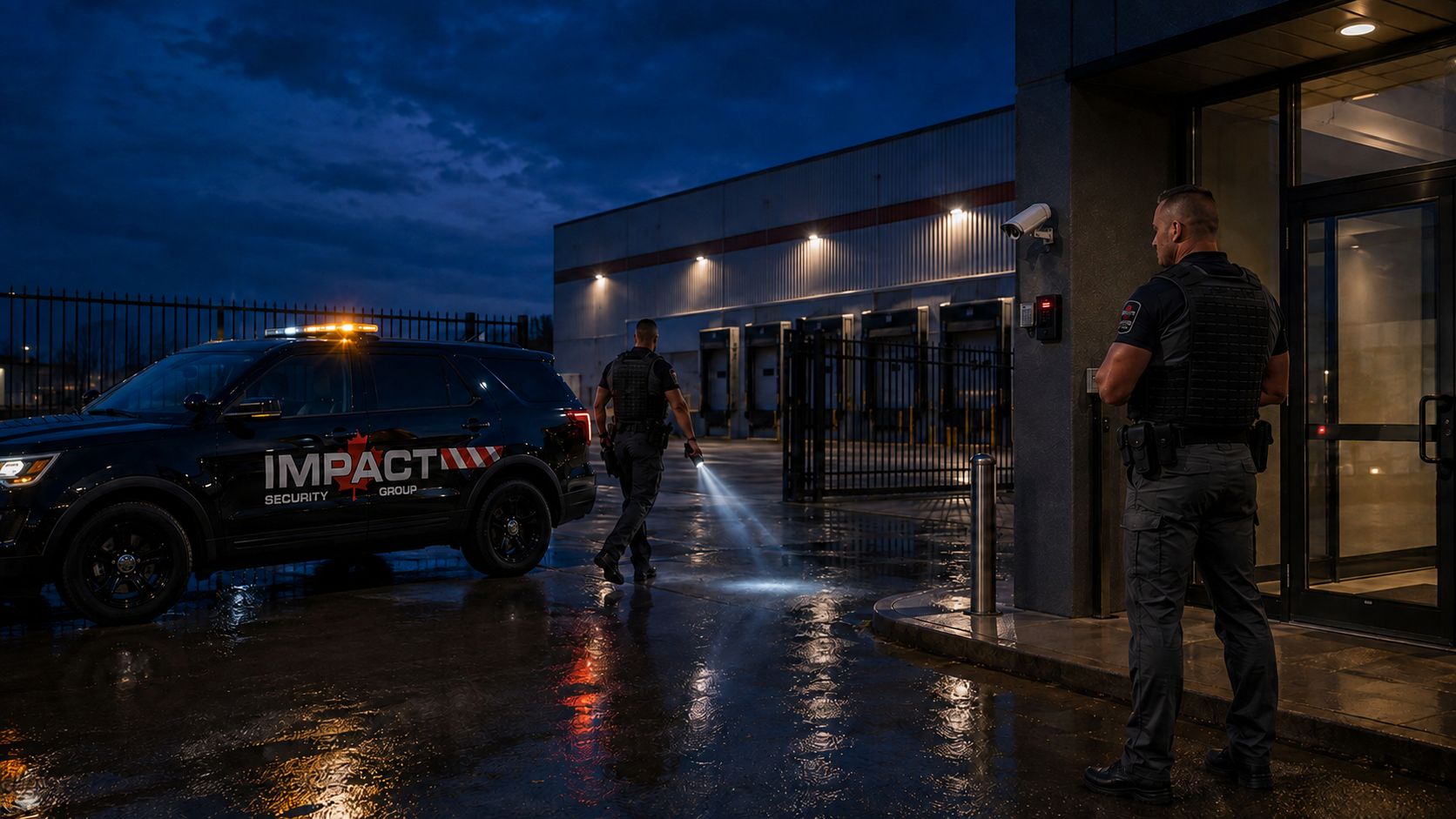
Usually, yes And sometimes the cheaper option is actually the better one, not just the more affordable one. Mobile patrol security exists precisely because most properties don't need a guard standing on them 24 hours a day. They need the right presence at the right times, and paying for anything more than that is money your budget never gets back.
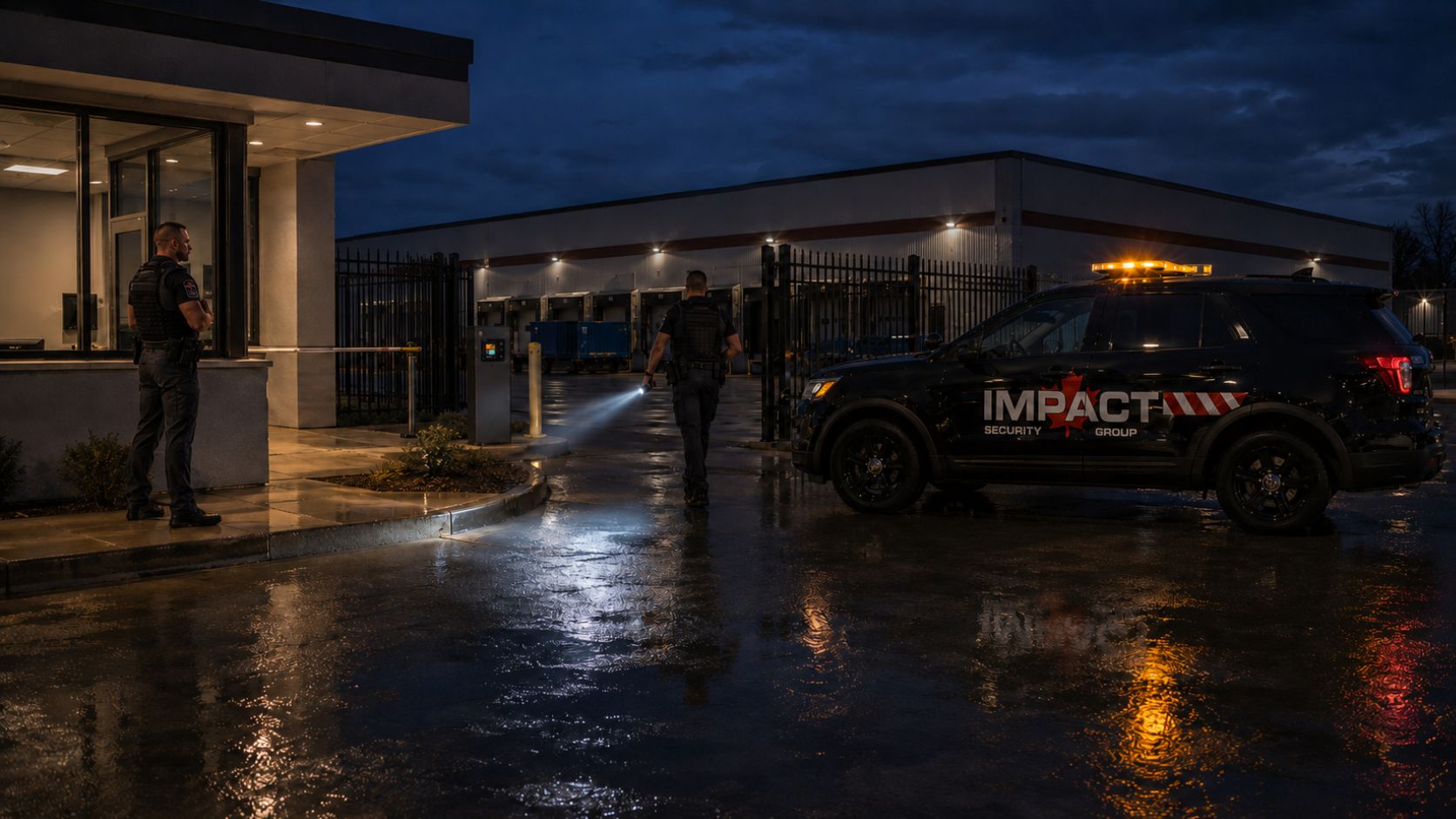
But mobile patrol isn't right for everyone either, and a security company that recommends it for every site is selling you what's easiest for them to staff. So here's the genuinely useful version of the comparison: how each service works, what each one costs relative to the other, and a straightforward way to figure out which side of the line your property sits on.
How mobile patrol security actually works
A mobile patrol is a licensed guard in a marked vehicle who visits your property on a schedule you set: once a night, every two hours, or anything in between. On each visit, the guard inspects your entrances, perimeter, parking areas, and any specific trouble spots you've flagged, then logs the check with time-stamped reporting, so you have proof the visit happened and a record of what was found.
Most patrol programs blend scheduled visits with random ones. The randomness matters more than people think. A patrol that arrives at 2 a.m. sharp every night is a patrol that anyone watching your property can plan around. One that might show up at any time forces a would-be thief to assume it could be five minutes away, which for most opportunists is reason enough to pick an easier target.
Patrol units also handle the jobs that make ownership of a commercial property genuinely annoying: alarm response at 3 a.m., lock-ups and unlocks, checking on a door a tenant swears they closed, and holding your keys so nobody has to drive across the city to let the fire department in. For a lot of our clients, the alarm response alone justifies the service, because the alternative is their own phone ringing in the middle of the night.
When a full-time on-site guard earns their cost
Some sites simply need a person there. The honest test is whether the risk at your property is continuous or intermittent. If things can go wrong at any moment, and the cost of those things is high, intermittent checks leave gaps that matter.
Continuous risk looks like this: a retail store with active theft during open hours. A construction site full of copper and diesel in a neighbourhood where both have a habit of walking away. A residential tower where the front desk is also access control, package security, and the first responder to any resident emergency. A distribution facility where trucks move around the clock and every gate transaction needs to be verified and logged.
An on-site guard also does something no patrol can: they accumulate knowledge of your site. They learn which contractor is legitimate and which face doesn't belong, which tenant props the fire door, which corner of the parkade attracts trouble. That familiarity is a security asset in its own right, and it compounds the longer the same team works your property.
The comparison, side by side
Cost mobile patrol is shared infrastructure: one vehicle and guard serve a route of clients, so each client pays a fraction of what a dedicated guard costs. Expect on-site coverage to run several times the monthly cost of a patrol program covering the same hours. For overnight-only risk, that difference is usually decisive.
Deterrence on-site wins during occupied hours; a visible uniform changes behaviour in real time. After hours, the gap narrows sharply, because a marked patrol vehicle with unpredictable timing creates uncertainty, and uncertainty is what deters.
Response on-site response is measured in seconds, patrol response in minutes. What matters is matching that to your actual risk. A break-in at a vacant warehouse doesn't need a ten-second response; it needs a reliable one with police coordination and a documented report. A live altercation in a lobby does need seconds. Be honest about which scenario your property actually produces.
Reporting both services should give you time-stamped digital reports. If a provider can't show you exactly when they patrolled and what they found, keep shopping. This is table stakes in Western Canada now, not a premium feature.
Flexibility patrol scales beautifully add visits during a rash of break-ins, scale back in quiet seasons. On-site coverage scales in whole shifts, which makes it a blunter instrument for a fluctuating risk.
What actually drives the price, on both sides
Since cost is the reason most people are reading this, it's worth knowing what moves it. For on-site guards, the drivers are hours and skill level, a 24/7 post is roughly 168 staffed hours a week plus relief coverage, and specialized roles, tactical retail work, concierge-trained officers, first-aid certified site staff, price above entry-level static posts. Nights, weekends, and statutory holidays are part of the arithmetic too, which is why an around-the-clock quote surprises people who mentally priced a single wage.
For mobile patrol, the drivers are visit frequency, time on site per visit, and how far your property sits from an existing route. A site inside a dense patrol route in Winnipeg or Calgary costs meaningfully less to serve than an isolated property forty minutes from the nearest run, and honest providers will say so rather than quoting low and skipping visits.
There's also an insurance angle people forget some commercial policies offer better terms for documented security coverage, and after a break-in, insurers frequently require it. If coverage you were going to buy anyway trims your premium or keeps a claim clean, the net cost of the service is lower than the invoice suggests. Ask your broker before you decide; it's a five-minute call that occasionally pays for the whole program.
The hybrid model most properties end up choosing
In practice, a large share of our commercial clients land on a blend, and it usually beats either pure option. A typical pattern an on-site guard during business hours or evening peak, when people and activity create the risk, then mobile patrol checks with alarm response overnight, when the building is empty and the risk is intrusion rather than incident.
Construction sites do a seasonal version of the same thing: dedicated overnight guards during the phases when the site is full of tools, materials, and machinery, then patrol-only coverage during early groundwork or after lock-up-ready stage. Condominium boards often pair a daytime concierge with overnight patrols of the parkade and grounds. The point is that this isn't an either-or decision. It's a coverage map, and the map should follow your risk hour by hour.
The mistakes we see in patrol setups, so you can skip them
After years of inheriting patrol programs from other providers, the failure patterns are familiar. The first is buying frequency without purpose: four checks a night sounds rigorous, but if all four are drive-bys that never leave the vehicle, a determined intruder learns that in a week. Specify what a check includes, doors physically pulled, perimeter walked, interior swept where applicable, and make it contractual.
The second is predictability. If your patrol logs show visits at the same times night after night, ask your provider why. Randomized windows cost nothing and multiply the deterrent effect, because the value of a patrol isn't only the minutes the guard is on site, it's every other minute someone watching can't rule out an arrival.
The third is treating the report as a formality. Patrol reports are a free early-warning system: a gate found unlocked twice in a month, transient activity edging closer, lights out along one fence line. Clients who actually read their reports fix five-dollar problems before they become five-thousand-dollar ones. If nobody in your organization owns that reading, assign it, or ask your provider to flag exceptions to you directly.
Five questions to ask before you sign with anyone
How do you verify patrols actually happened?
What's your realistic response time to my address, and from where?
Who manages my account locally, and can I reach them?
What are your guards trained and licensed for in my province?
What happens when something goes wrong?
How do you determine the right security solution for a property?