Retail Security in Edmonton: What a Store Guard Actually Does
A retail security guard does far more than stand at the door. In an Edmonton store, a good guard deters theft, supports loss prevention, helps staff handle difficult customers, monitors entrances and the sales floor, assists during opening and closing, keeps an eye on the parking area, and documents incidents all while protecting the customer experience rather than undermining it. The best retail security balances reducing loss with keeping shoppers comfortable.
Sep 09, 2026
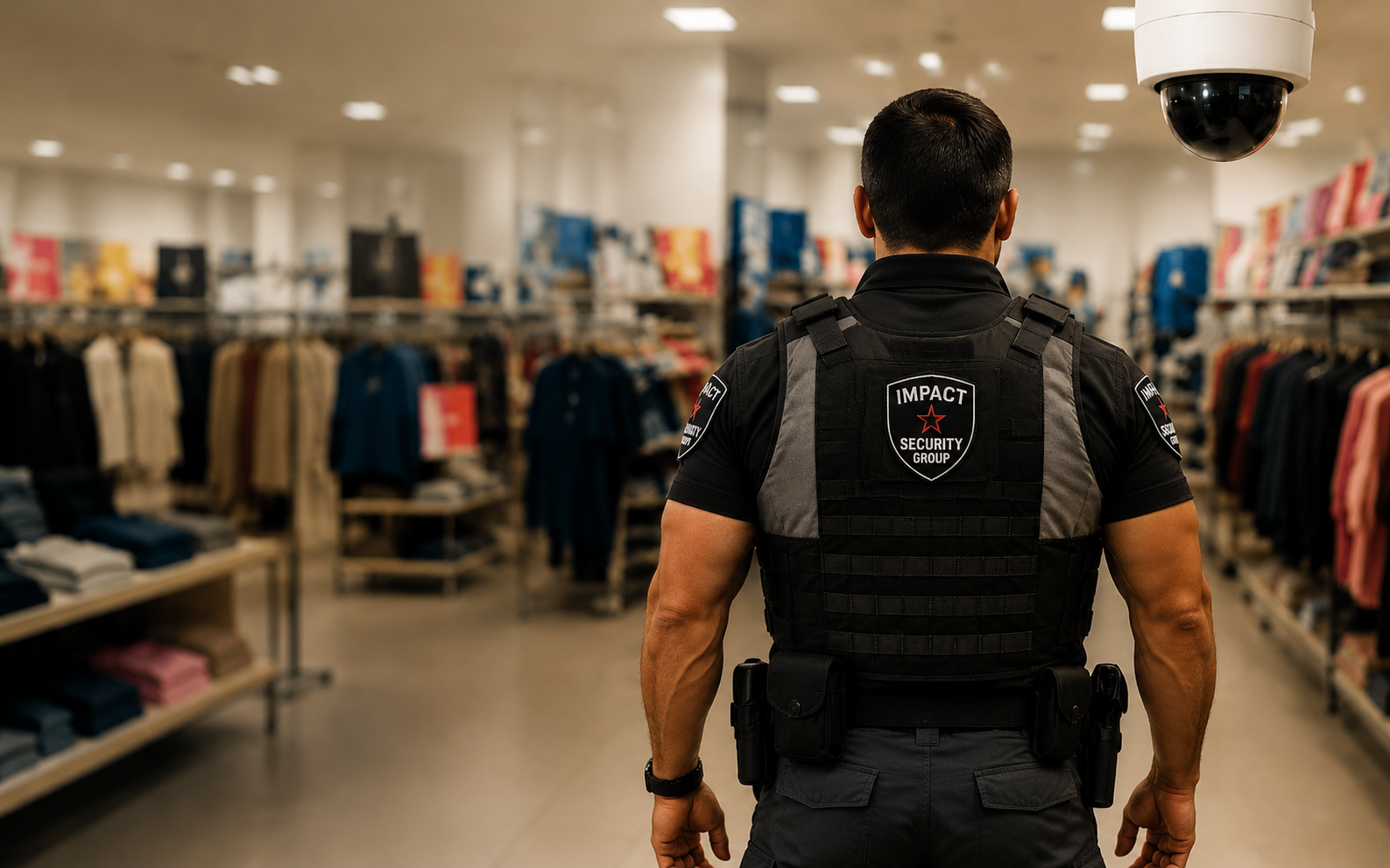
In an Edmonton store, a good guard helps deter theft, supports staff during difficult situations, watches entrances and key areas, helps with opening and closing, keeps an eye on the parking lot, and documents incidents when something goes wrong.
Just as importantly, they need to do all of that without making customers feel uncomfortable. That balance is what good retail security is really about: protecting the store while still keeping it welcoming.
Retail security is often misunderstood. Some businesses picture a guard standing by the door all day and expect theft to disappear.
In reality, effective retail security is much more involved. The guard becomes part of how the store runs, moving between prevention, staff support, customer service, and incident response throughout the day. Here’s what that role actually looks like.
What does a retail security guard do?
A retail guard’s job usually covers much more than one part of the store.
Depending on the location and the risks involved, they may move between the entrance, sales floor, fitting-room area, checkout, stockroom access points, and parking lot. Their main responsibilities often include:
- Visible deterrence — simply having a professional security presence can discourage opportunistic theft.
- Loss-prevention support — watching for suspicious behaviour and supporting the store’s wider theft-prevention efforts.
- Monitoring key areas — keeping an eye on entrances, high-value products, fitting rooms, stockroom doors, and other vulnerable spots.
- Supporting staff — stepping in when employees are dealing with aggressive, disruptive, or unsafe situations.
- Opening and closing support — helping make sure the store is secure when employees arrive or leave.
- Parking-area observation — watching for suspicious activity, vehicle incidents, or other concerns outside the store.
- Incident reporting — clearly documenting what happened so management, police, or insurers have an accurate record if needed.
The exact mix will depend on the store. A small boutique won’t have the same security needs as a large retail location with high-value merchandise.
Security without making customers uncomfortable
This is one of the most important parts of retail security. A guard shouldn’t make every shopper feel like they’re being watched or treated as a suspect. The best retail guards are visible and alert, but also approachable.
They may greet customers, answer simple questions, help with directions, and generally contribute to a calm, well-run atmosphere while still watching for genuine concerns.
That matters because security and customer service don’t have to work against each other. A professional guard can help shoppers feel safer without making the store feel tense.
In many Edmonton stores, the guard is part of the customer’s first impression of the business. That means presentation, communication, and attitude matter just as much as staying alert.
Helping with difficult or aggressive customers
Retail staff deal with more confrontation than many people realise. It could be an argument over a return, an intoxicated customer, an aggressive individual, or someone becoming confrontational after being suspected of theft.
These situations can become stressful very quickly. A trained security guard gives employees someone to call on when they don’t feel comfortable handling the situation alone.
The goal is usually to keep things calm, create space between people, de-escalate where possible, and respond appropriately if the situation becomes more serious.
For many stores, this staff-safety role is one of the biggest reasons they decide to bring in security in the first place.
Opening, closing, and the hours that matter most
Security isn’t only about what happens during the busiest part of the day. Opening and closing can be some of the more vulnerable times for a retail store.
Employees may be arriving before other businesses are open, unlocking doors, handling cash, or walking through a quiet parking lot.
Having a guard present during these periods can help with store checks, staff safety, parking-lot awareness, and making sure the location is properly secured. This is why the hours you choose for security matter just as much as having a guard there at all.
Retail security vs. loss prevention: what’s the difference?
The two roles overlap, but they aren’t exactly the same.
A uniformed retail security guard is usually highly visible. Their presence helps discourage theft, support employees, and respond to safety concerns. A loss-prevention officer is often more focused on identifying and documenting theft and may work in plain clothes.
| Role | Uniformed retail guard | Loss-prevention officer |
|---|---|---|
| Visibility | Visible and uniformed | Often plainclothes |
| Main focus | Deterrence, safety, staff support | Detecting and documenting theft |
| Customer contact | Usually high | Usually limited |
| Best suited for | Opportunistic theft and safety concerns | Repeat or deliberate theft |
Some retailers may benefit from one approach, while others may use both. The right choice depends on the store’s size, layout, merchandise, location, and theft history.
What Edmonton retailers should think about
Not every Edmonton store faces the same risks. A downtown storefront may be more concerned about street activity and after-hours issues. A suburban plaza may have more concerns around parking lots or isolated closing times.
A mall store may already have centre-wide security but still need extra support inside the unit. That’s why retail security shouldn’t be treated as a standard package. A few useful questions to ask are:
- What products are most likely to be targeted?
- When do incidents usually happen?
- Are there blind spots or poor sightlines inside the store?
- Do employees regularly deal with difficult customers?
- Is the parking area a concern?
- Are staff arriving or leaving alone?
- How visible or customer-facing should the guard be?
The answers usually tell you more about what type of security you need than simply asking, “How many guards should we have?”
Choosing security that actually fits the store
The goal isn’t to put a guard in the building just so you can say security is there. The goal is to understand where the real problems are and use security in a way that actually helps.
That might mean focusing on theft deterrence. It might mean giving staff more support during difficult situations. It could mean better opening and closing coverage, parking-lot observation, or a mix of all of those. A good security plan should fit the way your store actually operates.
Need help figuring out what your store needs?
If you run a retail store in Edmonton and you’re trying to work out what type of security would actually be useful, Impact Security Group can help you look at the store, its risks, and the level of support your team needs.
You can learn more about our retail security services or speak with our Edmonton team about the right approach for your location.
FAQs
What does a retail security guard do?
What’s the difference between retail security and loss prevention?
Can a security guard help with aggressive customers?
Do retail guards work at opening and closing?
How do I choose retail security for my Edmonton store?