Securing Under-Occupied Office Buildings in Downtown Calgary
A partially vacant office building carries a different security profile than a full one. Empty floors, sublease space and reduced daytime activity create areas nobody is watching, while the building's entrances, elevators and parkade still serve the tenants who remain. Securing it well means controlling access to vacant floors, keeping a regular patrol presence through unoccupied areas, protecting the parkade and after-hours periods, and matching coverage to the building's actual occupancy rather than its original design.
Sep 02, 2026
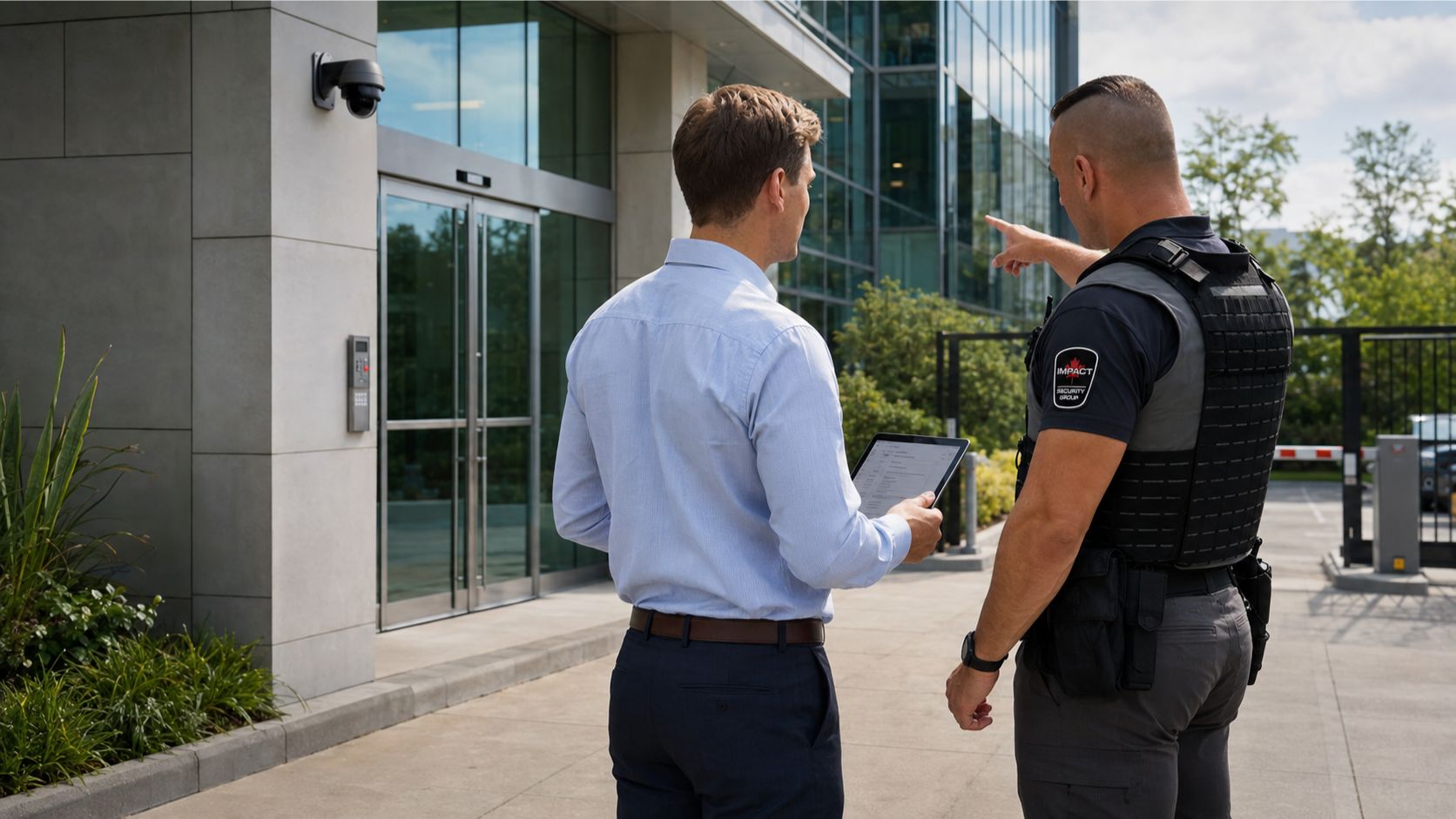
This is a Calgary problem more than anywhere else in Canada. Downtown Calgary's office vacancy rate stood at 30.4% at the end of 2025 according to CBRE, the highest of any major Canadian market, driven largely by consolidation in the energy sector. The city is actively converting underused office space through its Downtown Office Conversion program. For property managers, that translates into a very specific daily reality towers where several floors are dark, sublease space sits empty for months, and the security plan written for a full building no longer fits.
Why a half-empty building is harder to secure than a full one
Well, occupancy is itself a security control. A full floor has people noticing who belongs, doors opening and closing on a rhythm, and lights on. Remove the tenants and you remove all of that, leaving spaces that are accessible from shared corridors and elevators but that no one routinely sees.
The result is a set of risks that don't exist in a fully leased tower:
- Unauthorized entry into vacant floors for shelter, theft of fixtures and copper, or simply because the space is unwatched.
- Undetected damage a leak, a failed heating zone or a broken window on an empty floor can go unnoticed for days, and in a Calgary winter that becomes frozen pipes fast.
- Access sprawl sublease tenants, leasing agents, contractors and conversion crews all need entry, often to different floors on different schedules, which strains a credential system built for stable tenancy.
- Parkade exposure lower occupancy means quieter parkades with fewer eyes, a well-known setting for vehicle break-ins.
- A perception problem remaining tenants notice when a building feels empty, and visible security is part of what keeps them.
What security does an under-occupied office building need?
The needs cluster into five areas. Not every building needs all five at full strength; the point is to assess each against your actual occupancy.
| Area | The problem in a partially vacant building | What to put in place |
|---|---|---|
| Vacant-floor access control | Empty floors reachable by elevator and stair from shared areas | Restrict elevator and stairwell access to vacant floors; audit who holds credentials; log contractor and leasing-agent entry |
| Interior patrol | No one routinely sees the empty space | Scheduled interior patrols through vacant floors checking for entry, damage and building-system issues |
| Lobby & concierge presence | Fewer tenants means less natural oversight at the entrance | Front-desk or concierge security during business hours to screen visitors and reassure remaining tenants |
| Parkade & after-hours coverage | Quiet parkades and empty evenings invite break-ins | Mobile patrol checks on a randomized schedule; alarm response |
| Reporting | Owners and asset managers need to know the building's actual condition | Patrol logs and incident reports covering vacant areas, not just occupied ones |
Matching coverage to occupancy, not to the original design
Most of the common mistake is running the security program the building had when it was full or, at the other extreme, cutting it back proportionally to the reduced rent roll. Neither fits. Coverage should follow where the risk now sits, which in an under-occupied building has shifted toward the empty floors, the parkade and the hours when the building is quietest.
In practice, many Calgary managers find the efficient answer is a blend a daytime lobby presence that serves the tenants who remain, plus interior and parkade patrols that cover the vacant areas the daytime presence can't reach. Mobile patrol is often the cost-effective tool for the after-hours and vacant-floor component, because it delivers a documented, randomized check without staffing a guard on empty floors around the clock. As occupancy changes a new tenant signs, a floor goes to conversion the coverage should be reviewed again.
Securing a building during office-to-residential conversion
A conversion project layers construction-site risk on top of an occupied building's risk. Contractors, material deliveries and demolition on some floors coexist with tenants and the public on others, so access control has to separate the two, and the building needs both construction-phase security and ongoing commercial security at once.
With Calgary's conversion program actively funding these projects, this is an increasingly common situation downtown. The key controls are dedicated construction access routes and credentials that don't open tenant floors, protection of materials and equipment staged inside the building, fire-watch arrangements whenever fire protection systems are impaired during the work, and clear communication so remaining tenants understand what's happening on the floors above and below them. If your building is heading into conversion, plan security for the transition itself, not just for the finished residential building.
What to review each quarter
A partially vacant building changes constantly. A quarterly review keeps the security program aligned:
- Which floors are occupied, vacant, sublease-available or under conversion now?
- Who holds credentials, and does the list still match the tenant and contractor roster?
- Are elevator and stairwell restrictions to vacant floors actually in place and working?
- What did patrol logs find on vacant floors entry attempts, damage, building-system issues?
- What incidents occurred in the parkade or after hours?
- Has occupancy changed enough that coverage should scale up or down?
If you manage a downtown Calgary building with vacant or transitioning floors, Impact Security Group's Calgary team can assess the building against its current occupancy and recommend a coverage blend lobby presence, interior and parkade patrols, access control that fits what the building actually is today.
FAQs
How do you secure vacant floors in an office building?
Is mobile patrol enough for an under-occupied office building?
Why is a partially vacant building a bigger security risk in winter?
What security does an office-to-residential conversion need?
How often should a partially vacant building's security be reviewed?