Security Guards vs. Cameras: Which Actually Protects Your Business?
Security cameras and alarms are detection tools they record incidents and raise alerts, but they can't physically intervene. A security guard is a response — a trained person who can prevent an incident, act on it in real time, and adapt to what's happening.
Aug 11, 2026
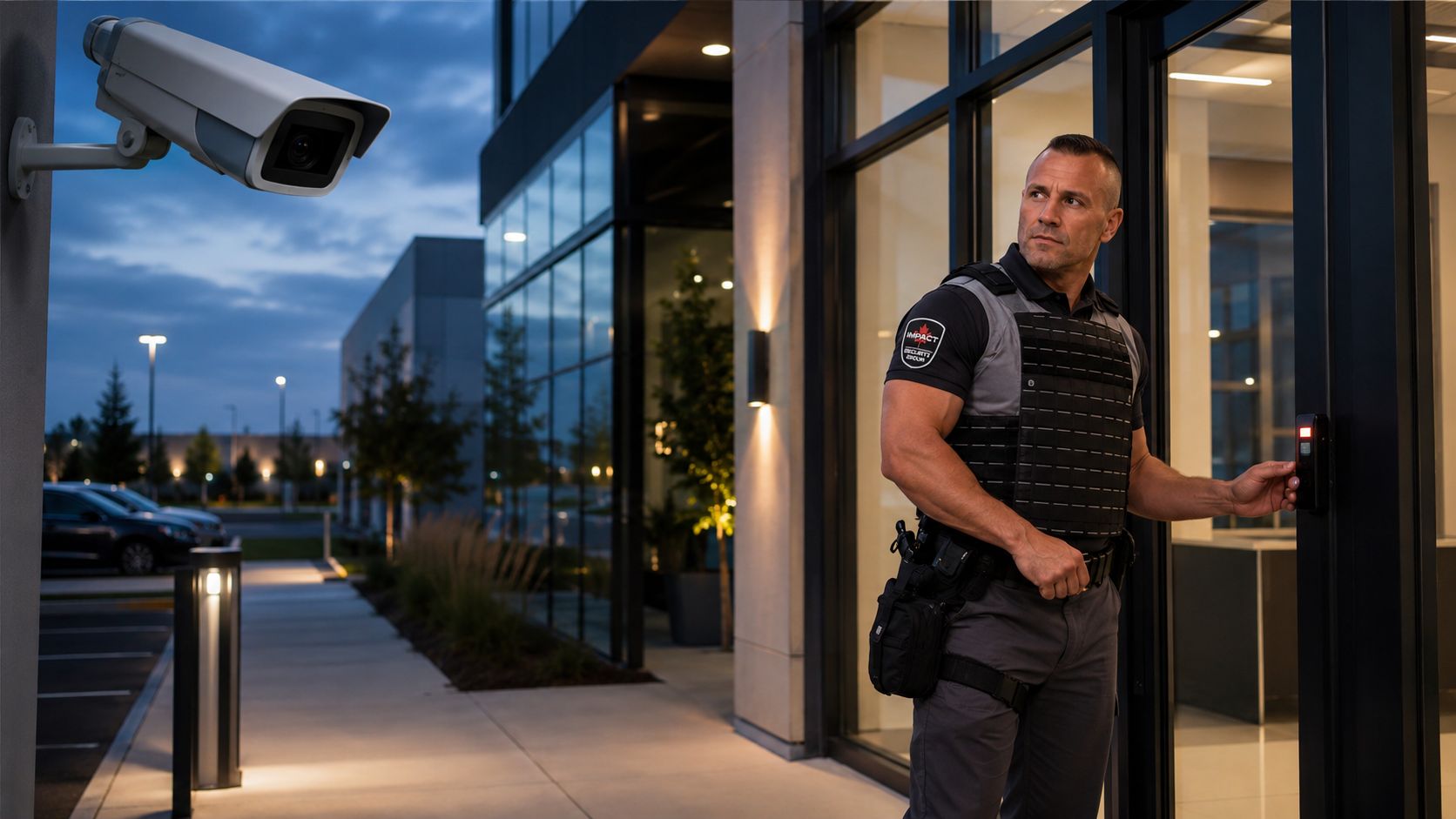
For most businesses, the strongest and most cost-effective protection isn't choosing one, but layering cameras and alarms for detection with guards or mobile patrol for response.
That's the short version. The longer version matters, because choosing wrong here wastes money in one of two ways: overspending on guarding you don't need, or saving money on cameras that leave you with excellent footage of a loss you couldn't stop. Here's how to tell the difference.
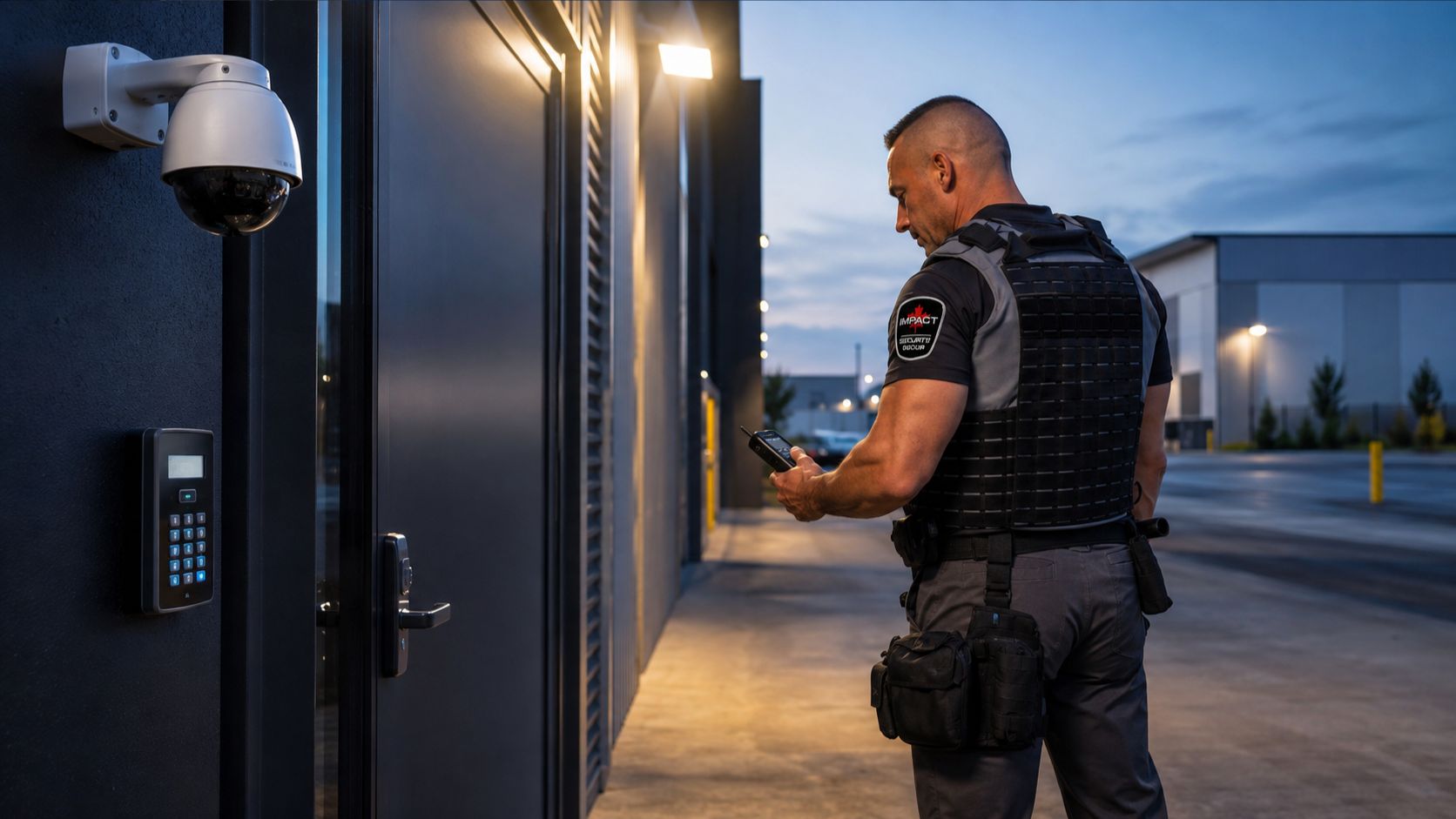
Guards, cameras & alarms: what each one actually does for the safety purpose
Every security tool falls into one of two jobs detecting that something is wrong, or responding to it. Understanding which job each tool does explains everything about where it helps and where it fails.
Security cameras (CCTV):
Cameras observe and record so it's deter casual opportunists who don't want to be filmed, and they produce evidence that helps police and insurers after an incident. What they can't do is act. A camera doesn't stop a break-in it films one. And footage only helps if someone is actually watching it in real time or reviewing it afterward an unmonitored camera is just a witness that never speaks up.
Alarm systems:
Alarms detect a specific event a door forced, glass broken, motion where there shouldn't be — and raise an alert. They're fast and tireless. But an alarm only sends a signal; someone still has to respond to it. And alarms are prone to false triggers, which is exactly why many police services now deprioritize unverified alarm calls. An alarm with no response plan behind it is a noise, not a protection.
Security guards:
A trained security guard is the only element on this list that can think and act. Guards deter visibly, screen access, verify alarms, intervene in real time, assist people, adapt to unfolding situations, and produce a professional record afterward. Their limitation is the mirror image of the technology's a guard covers the ground they're standing on, and they cost more than a camera because a person costs more than a device.
The comparison at a glance
| Factor | Security cameras | Alarm systems | Security guards |
|---|---|---|---|
| Primary job | Record & deter | Detect & alert | Prevent & respond |
| Real-time intervention | No | No | Yes |
| Deterrence | Moderate (visible) | Low (until triggered) | High (visible presence) |
| Works unattended | Yes (records) | Yes (alerts) | N/A |
| Adapts to new situations | No | No | Yes |
| Provides evidence | Excellent | Basic log | Detailed reports |
| Ongoing cost | Low | Low | Higher |
| Upfront cost | Higher | Moderate | None |
| Best at | Coverage & proof | Fast detection | Judgment & response |
Are security cameras enough to protect a business?
For some low-risk situations, cameras and a monitored alarm genuinely are enough a small, low-traffic premises with nothing especially valuable, where the goal is mainly deterrence and after-the-fact evidence. If that's you, spending on a full-time guard may be overkill.
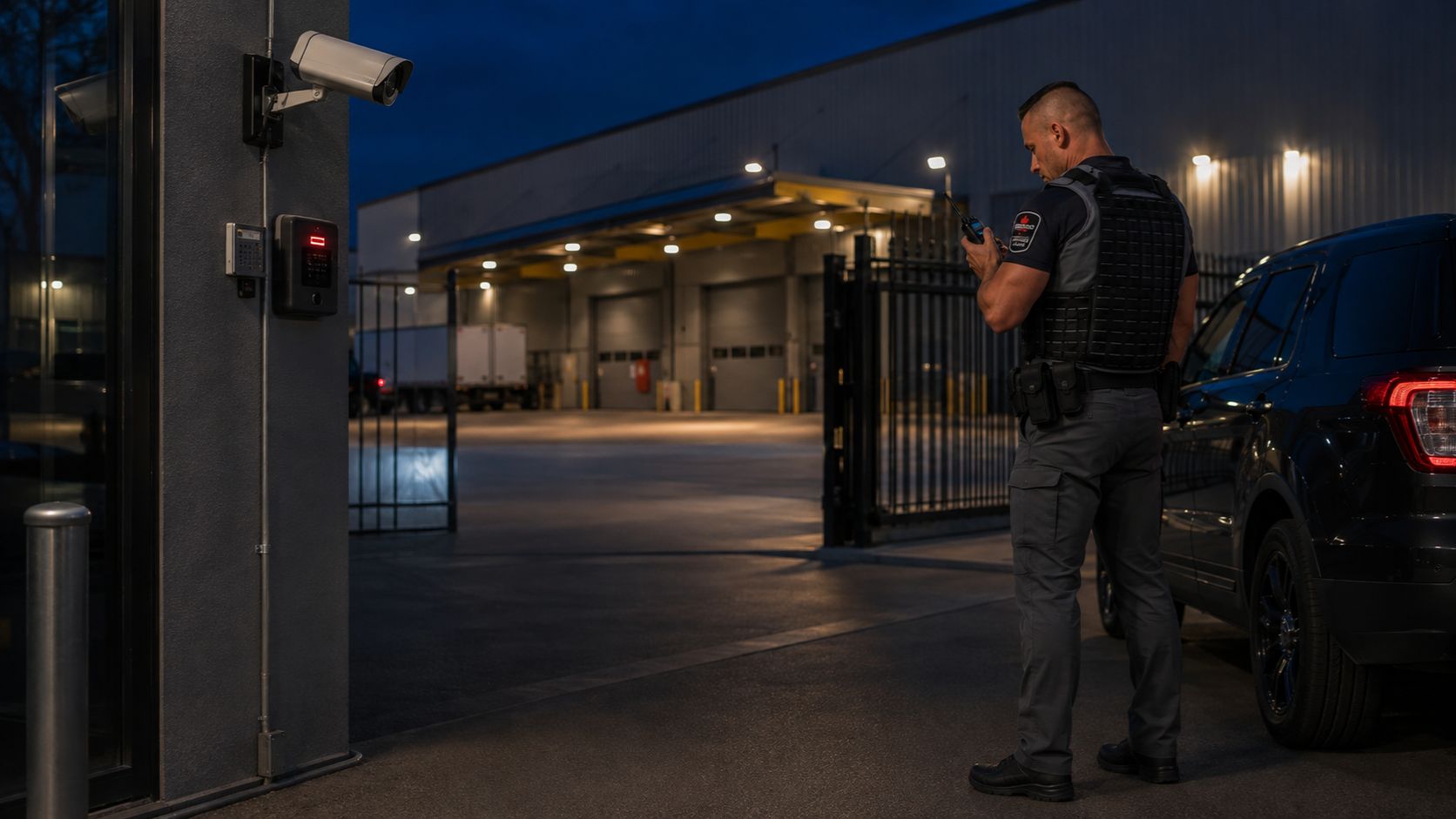
This is the single most important insight in the guards-versus-cameras debate cameras change what you know, not what happens. They're detection. If your risk requires anyone to act to intervene, verify, deny access, or respond quickly a camera can't fill that role no matter how many you install.
This is the single most important insight in the guards-versus-cameras debate cameras change what you know, not what happens. They're detection. If your risk requires anyone to act to intervene, verify, deny access, or respond quickly a camera can't fill that role no matter how many you install.
So when do you actually need a security guard?
You likely need a guard, not just cameras, when any of these apply:
- Real-time response matters: If an incident needs to be stopped as it happens theft, trespassing, a volatile customer you need a responder on site.
- You have people to protect, not just property: Staff, customers, tenants, or residents need someone who can assist and intervene, which no camera can do.
- Access needs controlling: Verifying who enters, screening visitors, and managing deliveries are active jobs requiring judgment.
- Your site is high-value or high-risk: Construction sites, retail floors, corporate buildings, and event venues carry risks that justify a human presence.
- Alarms need verifying: A guard or mobile patrol who responds to alarm activations solves the false-alarm and no-response problem in one move.
The honest answer:
Here's what experienced security professionals actually recommend, and it's rarely "guards or cameras." It's both, deployed so each covers the other's blind spot.
Cameras and alarms extend a guard's reach they watch the areas a guard can't stand in and never take a break. Guards and patrols supply the response that technology fundamentally can't. Used together, technology lets you cover more ground with fewer guard hours, which is frequently where the real cost savings live. A mobile patrol responding to camera-verified alerts, for example, protects a large property for a fraction of the cost of a full-time on-site guard, while still delivering the one thing cameras can't: someone who shows up.
The best security programs are designed around this layering detection technology plus human response, matched to the specific risks and hours of each property.
How to decide what your business needs
- Identify your actual risk: Is it after-hours intrusion, daytime theft, access control, protecting people, or all of these?
- Separate detection from response: For each risk, ask do I just need to know it happened, or does someone need to act?
- Match coverage to your risk hours: Often the answer is technology round-the-clock plus human response during your genuine risk windows.
- Get a professional assessment: An experienced provider will map your risks and recommend the leanest effective mix honestly.
At Impact Security Group, we've protected businesses across Western Canada since 1999 with exactly this layered approach combining uniformed guards, mobile patrol, CCTV, and access control into commercial security programs built around each client's real risks, not a one-size template. If you're weighing cameras against guards for your business, request a free assessment and we'll help you find the right balance.
FAQ
How do security guards and cameras work together?
How can I choose between security guards and security cameras for my business?
How much do security guards cost compared to cameras?
Are security cameras enough to stop a break-in?
How long does it take to set up business security?