Security Services in Edmonton: What Businesses Should Know Before Hiring a Security Company
Before hiring a security company in Edmonton, confirm three things. First, that the company holds an Alberta security services business licence and that each guard assigned to your site holds an individual licence. Second, that it can show proof of liability insurance, since Alberta's licensing requirements include at least $1 million in coverage. Third, that the type of coverage fits your property and hours. Then compare proposals on scope, supervision and reporting, not just price.
Sep 29, 2026
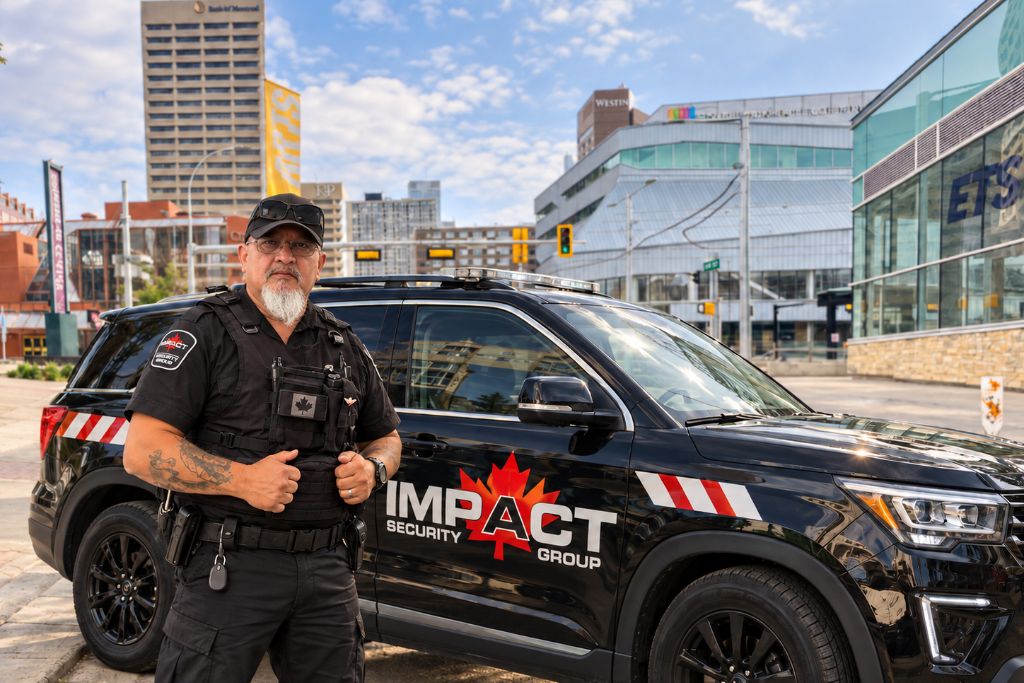
Most businesses hire security the way they'd hire any contractor. They need it soon, they collect a few quotes, and they go with the one that sounds sensible. In most industries that works fine. In security it skips the part that does the most work for you, because Alberta regulates this industry properly, and a good share of your due diligence can be done in an afternoon with a licence number and a certificate of insurance.
This guide covers what the province actually regulates, how to check a provider against it, how to match the service to the kind of property you run in Edmonton, and the order we'd suggest working through the decision. It's general information, not legal advice. Where a rule matters to your situation, confirm it with the source named beside it.
What Alberta regulates, in plain terms
Private security in Alberta falls under the Security Services and Investigators Act, and Alberta Justice issues the licences. There are two layers, and buyers tend to mix them up.
The individual licence
Working as a security guard, patrol dog handler, alarm responder, loss prevention worker or bodyguard in Alberta requires a security service worker licence. The province sets eligibility requirements for it, including a minimum age, eligibility to work in Canada, an English fluency standard and criminal-record screening. For you as a buyer, the practical point is simple: the person standing on your site should hold a licence of their own, and you're entitled to ask.
The business licence
A business that provides licensed individuals to do security work, or that employs its own guards, must hold a security business licence. The province's requirements for a licensed security business include being a registered Canadian business, having an Alberta address, holding any municipal licence that applies, and carrying at least $1 million in liability insurance. Businesses that serve the public must also provide criminal record checks for their owners, partners and directors. So the province looks at who owns the company, not only at who wears the uniform.
What Alberta regulates, in plain terms
If you contract a security company, your own business doesn't need a security licence. Alberta's licensing pages say businesses that obtain security services from a contract company aren't required to hold one. If you hire guards directly as employees, your business needs its own in-house business licence and your guards need individual licences. That licensing paperwork, and the scheduling burden that goes with it, is a large part of why many businesses contract the service instead.
The regulation lists classes that include general security services, loss prevention services and executive security services. Confirm that the provider's licence covers the service you're actually buying rather than assuming it does , check the Licences are issued by class. An Alberta mailing address is a licensing requirement, not proof of local operations. Ask where the supervisor for your site is based and how long it takes them to reach it.
How to verify a provider before you talk price
Most of this can be settled before anyone visits your site. Ask every provider on your shortlist for the same set of documents.
| Ask for | What it tells you | Worth knowing |
|---|---|---|
| Alberta security business licence (number and class) | The company is licensed by Alberta Justice for the service you need | Check the class matches, for example loss prevention if that's what you're buying |
| Individual licences for guards assigned to your site | The people on site are themselves licensed | Roles requiring a licence include guards, alarm responders, loss prevention workers and bodyguards |
| Certificate of insurance | Liability cover is actually in force | $1 million is the provincial licensing minimum. Ask what the provider carries and ask your own broker whether that suits your risk |
| Municipal business licence position | The provider is meeting local requirements | The City of Edmonton states that businesses operating in Edmonton must hold a business licence under Bylaw 20002. Ask how that applies to the provider's operation |
| Proof of workers' compensation coverage | The provider's staff are covered if injured on your site | A general due-diligence step. Ask your broker or the provider how it applies to your situation |
One more small check: a licensed business with several locations holds a single licence but must display a copy at each location, so if a provider has an Edmonton office, asking to see the displayed copy is a reasonable request. And if anything is unclear, Alberta Justice issues these licences and is the body to confirm with.
A licence tells you the provider is allowed to operate. It doesn't tell you the provider is any good. Supervision, reporting and consistency are things you judge from what you're shown and from how the service performs once it starts, which is a separate skill (see our guide on how to tell whether your security is actually working).
Match the service to your Edmonton property
The other half of the decision is fit. "Security services" is an umbrella term, and different Edmonton properties need different things under it. This table is a starting point for the conversation, not a prescription.
| Property type | What usually drives the need | Services worth asking about |
|---|---|---|
| Downtown office or multi-tenant building | Visitor flow, access control, parkade, after-hours empty floors | Concierge or lobby presence, plus mobile patrol for after hours |
| Retail plaza, mall unit or big-box store | Theft, staff safety, opening and closing, parking lot | Uniformed guard, loss prevention, patrol of the lot |
| Construction or development site | Perimeter, deliveries, equipment left overnight, fire systems out of service during work | Overnight static guard, patrol, and fire watch when requiredand ask your own broker whether that suits your risk |
| Industrial yard or warehouse | Large footprint, gate control, long unattended hours | Gate or static post, mobile patrol, alarm response |
| Condominium or apartment building | Lobby, parkade, resident concerns, after-hours incidents | Concierge security, scheduled patrols |
| Event or venue | Crowd flow, alcohol, entry screening | Event security planned ahead of the date |
| Vacant or between-tenant property | Undetected entry or damage while nobody is around | Scheduled patrol checks, exterior and interior |
If you're unsure how the service types differ, our guide to what security guard services actually cover walks through each one, and the guard-versus-patrol decision guide helps when the question is how much presence you really need.
Edmonton's winter belongs in the security plan
A national checklist misses one local variable: the winter. Short days mean more of your operating hours happen in the dark. Sub-zero temperatures are hard on patrol vehicles and on anyone posted outdoors. A vacant or lightly used building can develop a heating or plumbing problem that nobody notices until the damage is done.
None of that changes the licensing questions. It should change the operational ones. Ask each provider:
- How are outdoor posts staffed and equipped through the cold months?
- How do you keep patrol vehicles reliable in winter?
- Do winter patrol checks of vacant space include the inside of the building, not just the perimeter?
- How does coverage flex when conditions get worse?
We can't tell you what any one provider will say. That's the point of asking. A provider who has worked Edmonton winters will answer without hesitating, and the specifics of the answer tell you more than the confidence does.
A sensible order for making the decision
- Define the problem and the hours: What happened, or what are you worried about, and when is the property actually exposed? Round-the-clock coverage is rarely the honest answer.
- Shortlist two to four providers and check licences early: There's no point negotiating with a company that can't show the right licence class.
- Give every provider the same brief: Same property description, same hours, same concerns. It's the only way the proposals become comparable.
- Walk the site with each of them: A provider that quotes a firm price without seeing a complex property is guessing.
- Compare like for like: Line up hours, guard type, supervision, reporting, insurance, winter coverage and how absences are covered before you compare the price.
- Read the contract for the awkward moments: Term, notice period, changing hours or scope, and what happens when a shift isn't filled.
- Plan the first month: Agree site instructions, contacts, key and access handover, and a review date, so problems surface early.
Questions worth asking on the first call
- Define the problem and the hours: What happened, or what are you worried about, and when is the property actually exposed? Round-the-clock coverage is rarely the honest answer.
- Shortlist two to four providers and check licences early: There's no point negotiating with a company that can't show the right licence class.
- Give every provider the same brief: Same property description, same hours, same concerns. It's the only way the proposals become comparable.
- Walk the site with each of them: A provider that quotes a firm price without seeing a complex property is guessing.
- Compare like for like: Line up hours, guard type, supervision, reporting, insurance, winter coverage and how absences are covered before you compare the price.
- Read the contract for the awkward moments: Term, notice period, changing hours or scope, and what happens when a shift isn't filled.
- Plan the first month: Agree site instructions, contacts, key and access handover, and a review date, so problems surface early.
A note on price
Once the documents check out and the proposals describe the same service, price finally becomes a fair comparison. Until then it isn't. A proposal that is far below the others has usually removed something: hours, supervision, guard grade, reporting or insurance. If a number looks too good, ask exactly how it was built. Our guide to security cost factors covers what drives the price in more detail.
If you're weighing security for an Edmonton property and want a second pair of eyes on the questions above, Impact Security Group can walk through your site with you and explain how coverage would be structured. Contact our Edmonton team to start the conversation.
This article is general information, not legal advice. Licensing requirements can change; confirm current rules with Alberta Justice and the City of Edmonton.
FAQs
Do security companies in Edmonton need to be licensed?
Do security guards in Alberta need a licence?
Does my business need a licence if I hire a security company?
How do I check a security company's licence in Alberta?
What insurance should a security company have?
How do I choose between a security guard and mobile patrol in Edmonton?