What Security Guard Services Actually Cover: Should know Business Owner's
"security guard services" is an umbrella term covering several distinct types of protection static (on-site) guards, mobile patrol, concierge and reception security, loss-prevention officers, event security, and specialist roles like fire watch. They differ in how they work, what they cost, and the problems they solve. Choosing well means matching the type of service to your actual risk, hours, and property not just hiring "a guard" and hoping it fits.
Sep 18, 2026
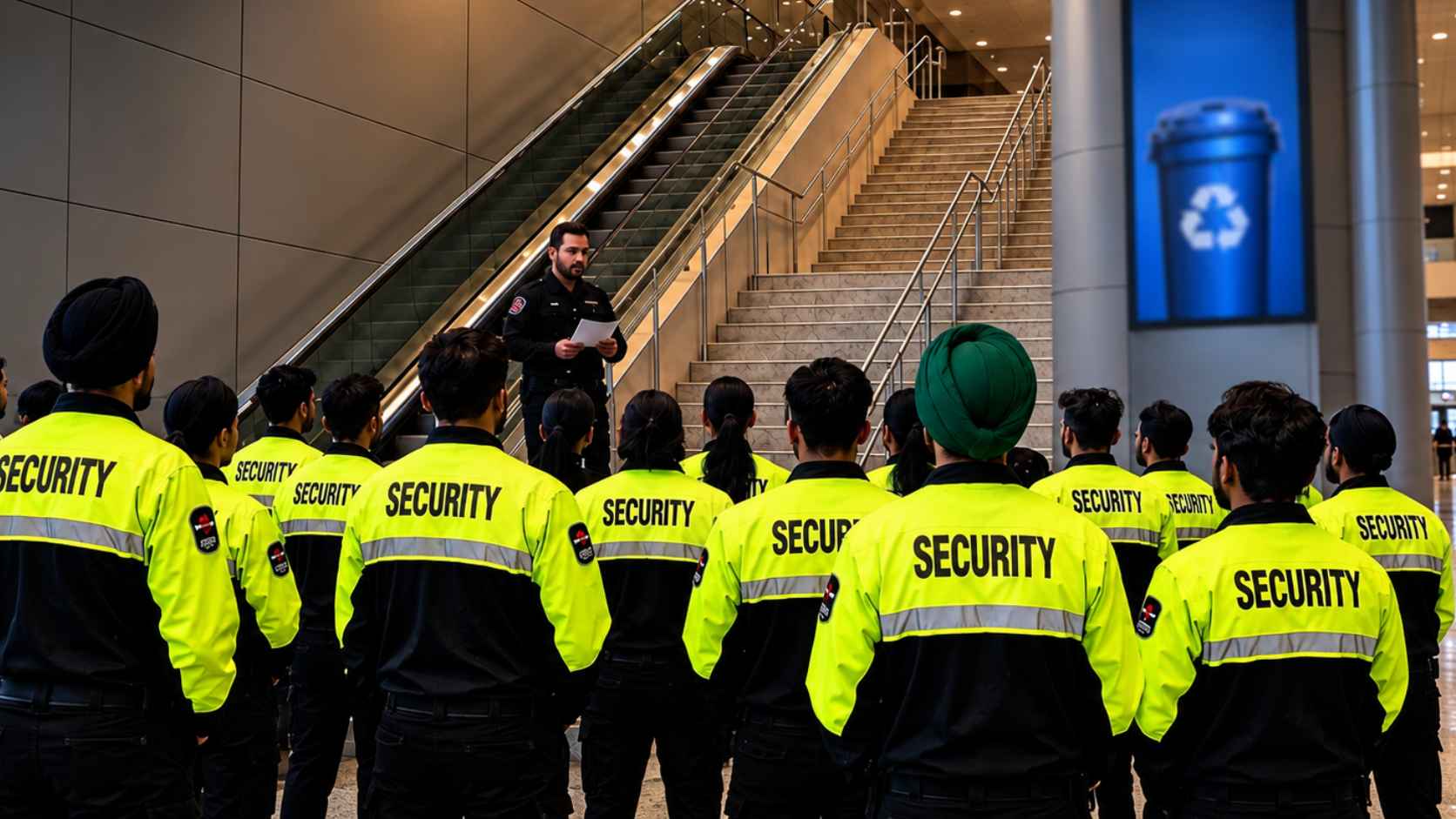
When a business first goes looking for security, "security guard services" sounds like one thing, a person in a uniform who stands somewhere and keeps an eye out. It's a reasonable assumption. It's also the reason a lot of businesses end up with the wrong coverage paying for a stationed guard when patrols would do, or expecting a door guard to solve a problem that needed a plainclothes loss-prevention officer. The phrase actually covers a whole family of services, each built for a different situation. Understanding the differences before you buy is the single easiest way to avoid overpaying or under-protecting. So here's the plain-language version of what's under the umbrella, and how to work out which piece of it you need.
What do security guard services include?
Most providers group security guard services into a few core types static guards stationed at one location, mobile patrols that visit on a schedule, concierge or reception security, loss-prevention officers for retail, event security, and specialist coverage such as fire watch. A single provider often delivers several of these, and many businesses use a combination.
They share a foundation licensed, trained personnel who deter, observe, respond, and document but each is shaped for a different environment. Here's what each one actually does.
1. Static (on-site) security guards
A static guard is stationed at one location for the length of a shift a lobby, a gate, a reception desk, a construction site. This is what most people picture, and it's the right choice when a property needs constant presence: controlling access, screening visitors, monitoring a busy site, or being on hand to respond to something the moment it happens. The trade-off is cost you're paying for every hour, whether or not anything occurs so static guarding earns its place where the risk is genuinely continuous.
2. Mobile patrol
Instead of staying in one place, a mobile patrol guard visits your property on a set or random schedule in a marked vehicle, checking entrances, perimeters, and problem areas, then moving on to the next site on the route. Because that guard serves several clients, mobile patrol costs a fraction of a dedicated static post over the same hours. It's the efficient choice for after-hours coverage, vacant properties, and businesses that need regular checks rather than a constant presence.
2. Concierge and reception security
Concierge security blends a professional front-desk presence with genuine security capability. The officer greets visitors, manages sign-ins and deliveries, and monitors the lobby all while being trained and ready to handle a security incident. It suits office towers, condominiums, and any building that wants protection without a hard, uninviting security look. It's security that doubles as hospitality.
3. Loss-prevention officers
Loss prevention is retail's specialist. These officers, often in plainclothes, focus specifically on detecting and documenting theft including organised or repeat theft that a visible uniformed guard won't catch. Retailers frequently pair the two: a uniform at the door to deter opportunists, and a plainclothes officer on the floor for deliberate theft. If shrinkage is the problem, this is the service built for it.
3. Event security
Event security is a distinct discipline covering entry screening, crowd management, guest and access control, and incident response for concerts, festivals, corporate functions, and private events. Guard numbers scale with attendance, alcohol service, and venue layout, and good event security is planned well before the doors open. It's not the same skill set as guarding a building, which is why it's treated as its own service.
4. Specialist services (fire watch and more)
Beyond the core types, guard services extend into specialist roles: fire watch when a building's fire-protection systems are impaired, close protection for individuals, parking enforcement, and traffic control. These are situation-specific and usually arranged when a particular need arises rather than run continuously.
5. Static vs mobile: the most common decision
The choice most businesses actually wrestle with is static guard versus mobile patrol. Choose static when risk is constant or a response is needed in seconds, choose mobile patrol when risk is intermittent and a response in minutes is acceptable. Many properties blend both.
| Factor | Static (on-site) guard | Mobile patrol |
|---|---|---|
| Presence | Constant, one location | Scheduled/random visits |
| Response | Immediate | Minutes (serving a route) |
| Relative cost | Higher (every hour) | Lower (shared route) |
| Best for | Constant risk, access control, people present | After-hours, vacant sites, deterrence, multiple properties |
How to work out which service you need
The choice most businesses actually wrestle with is static guard versus mobile patrol. Choose static when risk is constant or a response is needed in seconds, choose mobile patrol when risk is intermittent and a response in minutes is acceptable. Many properties blend both.
Is your risk constant or occasional?
Constant points to a static guard; occasional points to patrol.
Are people present who need protecting or assisting?
If yes, lean toward an on-site presence.
Is theft your main concern, and is it retail?
That points to loss prevention, not just a uniform.
Do you want a welcoming front-of-house feel?
Concierge security fits.
Is this a one-off event?
Event security is its own service, not a general guard.
When is your property actually exposed?
Match coverage to those hours rather than defaulting to round-the-clock.
Most businesses find the answer isn't a single service but a sensible combination a daytime presence with after-hours patrols, or a uniformed guard alongside loss prevention. A good provider will help you map this rather than sell you the most expensive option by default.
What every guard service should include, whatever the type
Regardless of which service fits, a few things should be standard from any professional provider: licensed, trained personnel, clear reporting you can actually review, supervision behind the individual guards and proper insurance. If a provider can't speak clearly to those, the type of service almost doesn't matter the fundamentals aren't there. The service type shapes what protection you get; these fundamentals determine whether it's delivered well.
If you're weighing up which type of security guard service fits your business, Impact Security Group can review your property and recommend the right coverage static, mobile, or a combination. Explore our security guard services or contact our team to talk it through.
FAQs
What are the main types of security guard services?
What is the difference between a static guard and mobile patrol?
Do I need a security guard or a loss-prevention officer?
How do I choose the right security guard service?
Can one company provide different types of security guards?