Winter Security for Commercial Properties in Canada: What Property Managers Should Know
Winter creates unique security challenges for commercial properties across Canada. From shorter daylight hours and snow-covered access points to vacant buildings and increased holiday security concerns, property managers need to be prepared. Learn about the most common winter security risks and discover how mobile patrols, on-site security guards, regular property inspections, and proactive planning can help protect commercial buildings, employees, and assets throughout the colder months.
Oct 22, 2026
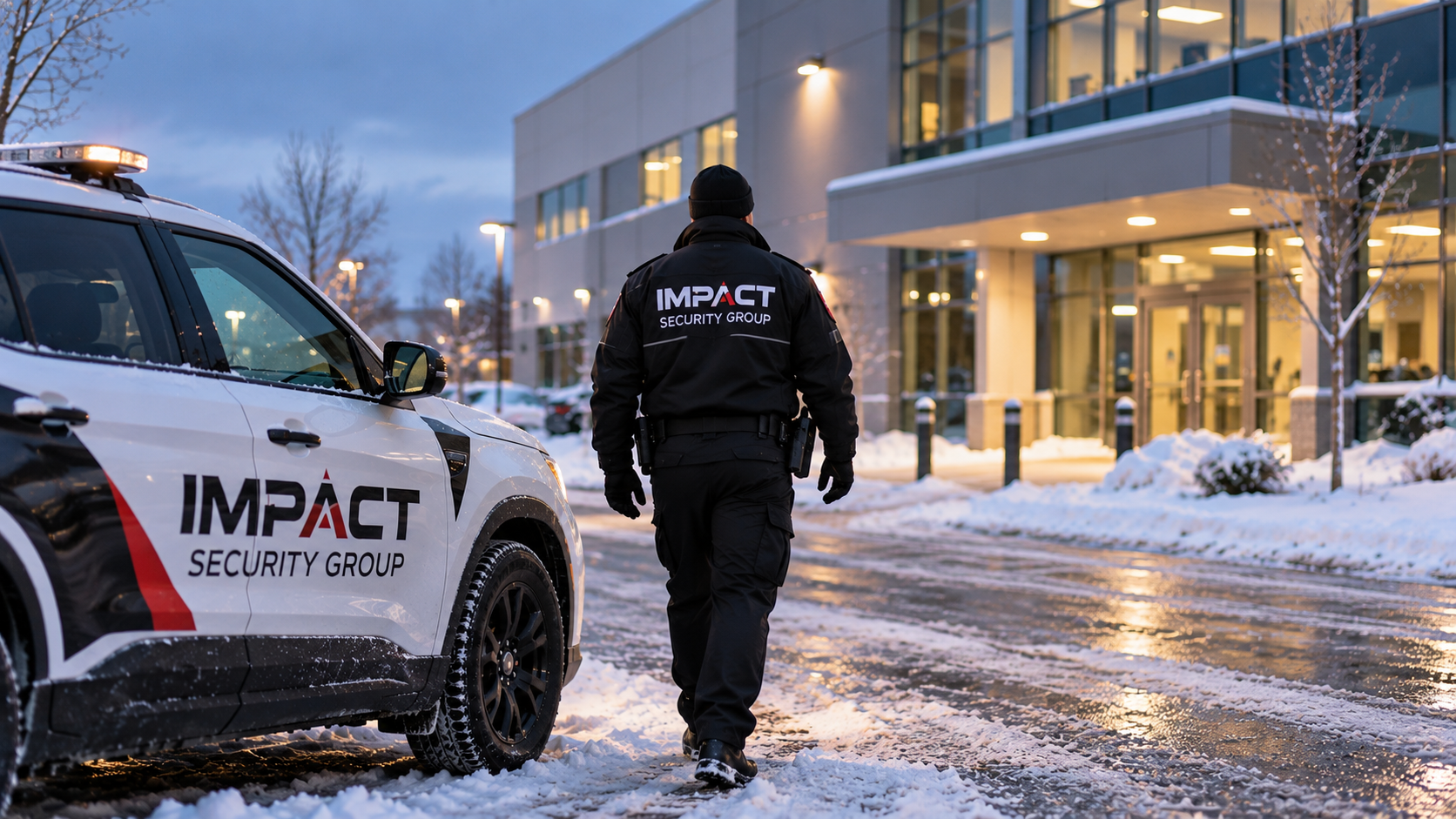
Winter brings a different set of challenges for commercial property managers across Canada. Shorter daylight hours, heavy snowfall, icy entrances, and reduced building occupancy can create security risks that aren't always obvious during warmer months. A property that operates smoothly throughout summer may need additional attention once temperatures drop, particularly when employees are arriving or leaving after dark and certain areas of the building are used less frequently.
1. Shorter Days Create Additional Security Concerns
One of the most noticeable changes during Canadian winters is how early it gets dark. In cities like Edmonton, Calgary, and Winnipeg, employees may arrive at work before sunrise and leave after sunset. This means parking lots, loading areas, building entrances, and exterior walkways are frequently used in low-light conditions. Poor visibility can make it harder to identify suspicious activity while also creating safety concerns for employees, visitors, and contractors.
2. Snow and Ice Can Create Unexpected Security Gaps
Snow accumulation is usually treated as a property maintenance concern, but it can also affect the effectiveness of existing security measures. Large snowbanks may obstruct surveillance cameras, reduce visibility around parking lots, and create hidden areas near entrances or perimeter fencing. Ice buildup can interfere with gates, locks, and access control systems, sometimes preventing doors or entry points from closing and securing properly. These issues may develop gradually, making them easy to overlook during routine operations.
3. Vacant Commercial Properties Require Consistent Monitoring
Commercial properties often experience reduced occupancy during winter, particularly around holiday closures or periods of lower business activity. Office buildings may remain empty for several days, industrial facilities may operate with fewer employees, and vacant commercial spaces may receive only occasional maintenance visits. Without consistent monitoring, problems such as unauthorized entry, broken windows, unsecured doors, or heating-related damage can remain unnoticed longer than they should.
4. Winter Holidays Can Change Security Requirements
The holiday season often creates two very different security situations for commercial properties. Retail centres and shopping facilities may experience increased customer traffic, longer operating hours, and additional deliveries, while office buildings and warehouses may close for extended periods. Both situations introduce security considerations that differ from normal operations. Busy retail environments may require additional monitoring of entrances and customer areas, while temporarily vacant buildings may need more frequent inspections and reliable alarm response arrangements.
5. Security Patrols Should Adapt to Winter Conditions
A security patrol plan that works during summer may not be equally effective once winter arrives. Snow-covered walkways, blocked access routes, icy parking areas, and changing building occupancy can affect how security officers move through and monitor a property. If patrol procedures are not reviewed, important areas may become difficult to access or receive less attention than intended. This is particularly relevant for large commercial properties, industrial facilities, and locations that rely on scheduled mobile patrol visits.
Winter Security Checklist for Commercial Property Managers
- Are exterior lights and surveillance cameras functioning properly?
- Are entrances, parking lots, loading areas, and emergency exits clearly visible?
- Could snow accumulation block cameras, gates, or access points?
- Are vacant buildings and low-occupancy areas inspected regularly?
- Have security patrol routes been adjusted for winter conditions?
- Are holiday access procedures and emergency contact lists up to date?
- Are all exterior doors, locks, and access control systems functioning properly in freezing temperatures?
Reviewing these areas regularly can help property managers identify potential vulnerabilities and determine whether existing security arrangements provide adequate coverage during winter.
Protecting Your Commercial Property Throughout Winter
Winter security requires preparation, consistent monitoring, and the flexibility to respond to changing property conditions. From reduced visibility and snow accumulation to holiday closures and vacant buildings, seasonal risks can affect commercial properties in different ways. The right combination of security procedures, professional personnel, and regular inspections can help property managers maintain protection without introducing unnecessary operational costs.
1. Why is winter security important for commercial properties in Canada?
2. How can mobile patrol security help protect commercial properties during winter?
3. Do vacant commercial buildings need additional security during winter?
4. Should businesses increase security coverage during winter holidays?
5. What is the best winter security solution for commercial properties?
6. How can I arrange professional winter security services in Canada?