Commercial Loading Dock Security: How to Protect Deliveries, Staff, and Property
Loading docks are busy areas where delivery vehicles, employees, contractors, and valuable shipments come together throughout the day. With frequent movement and multiple people accessing the same space, these areas can become vulnerable to theft, unauthorized entry, suspicious activity, and disruptions to normal business operations. Discover the most common loading dock security risks, why proper monitoring matters, and how professional security services can help protect your deliveries, employees, inventory, and commercial property while supporting safer and more efficient daily operations.
Nov 25, 2026
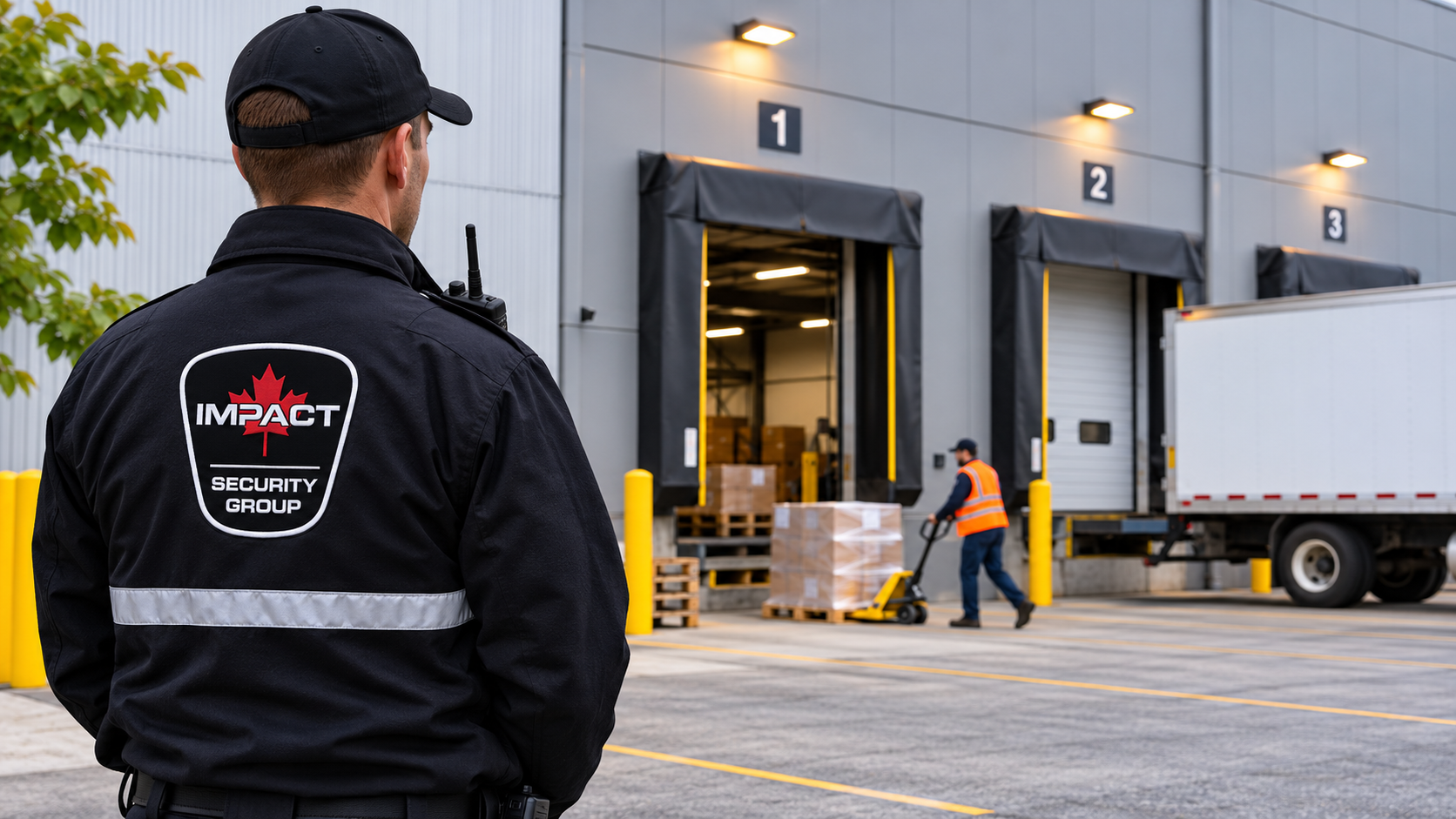
Loading docks are essential to the daily operations of warehouses, distribution centres, retail stores, and commercial properties. They are where delivery vehicles arrive, shipments are received, inventory is transferred, and employees coordinate the movement of goods. With so much activity taking place in one area, loading docks can become vulnerable to security concerns such as unauthorized access, cargo theft, suspicious vehicle activity, and disruptions to daily operations. Without appropriate monitoring and access procedures, even a routine delivery area can create opportunities for incidents that affect a business's property, employees, and operations.
Commercial loading dock security helps businesses maintain better oversight of these high-traffic areas while supporting a safer and more controlled working environment. From monitoring delivery activity and restricting access to protecting inventory and addressing after-hours vulnerabilities, a well-planned security approach can help reduce potential risks. In this article, we explore common loading dock security challenges and explain how professional security services can help businesses protect their deliveries, staff, and commercial property.
1. Prevent Unauthorized Access to Loading Dock Areas
Loading docks often have different access requirements from the main entrance of a commercial building. Drivers, suppliers, contractors, employees, and service providers may need to enter the area throughout the day, sometimes without passing through the building's primary reception or access control point. This creates opportunities for unauthorized individuals to enter restricted spaces by following delivery vehicles, claiming to be expected visitors, or taking advantage of busy periods. Without consistent procedures, it can become difficult for employees to distinguish authorized visitors from people who have no legitimate reason to be on the property.
Businesses should establish clear rules for who can access loading dock areas and how that access is verified. Depending on the property, procedures may include designated delivery entrances, visitor check-ins, employee identification, delivery schedules, and restricted access to storage or inventory areas. Security personnel can support these procedures by monitoring activity, observing unusual behaviour, and helping maintain awareness around entry points. A visible security presence can also discourage individuals from attempting to enter areas where they do not belong. Businesses looking for broader protection can explore Impact Security Group's corporate security services, which include professional security solutions for organizations and commercial environments.
2. Reduce the Risk of Cargo and Inventory Theft
Loading docks are frequently used to move valuable products between delivery vehicles, storage areas, and the main facility. During these transfers, merchandise may be temporarily left unattended or placed in locations where it is easier to access than secured inventory areas. Busy delivery periods can make it difficult for employees to monitor every shipment, particularly when several vehicles arrive close together. These conditions can create opportunities for theft, whether through unauthorized removal of goods, suspicious activity around parked vehicles, or gaps in the handling and storage process.
A stronger security approach begins with understanding how goods move through the property and identifying where inventory is most exposed. Businesses can review shipment procedures, limit access to storage areas, maintain accurate delivery records, and establish clear responsibility for receiving merchandise. Security guards and mobile patrol personnel can provide an additional layer of oversight by monitoring loading areas, identifying unusual activity, and reporting concerns according to established site procedures. These measures can help businesses improve visibility over their property and reduce opportunities for inventory-related losses. Learn more about how professional security guards and mobile patrols compare when deciding what type of coverage may suit your facility.
3. Monitor Delivery Vehicles and Driver Activity
Commercial loading docks can experience a steady flow of delivery trucks, courier vehicles, supplier representatives, and other authorized visitors. When vehicle activity is not properly coordinated, businesses may face confusion about which vehicles are expected, where they should park, and which areas they are permitted to access. Unscheduled arrivals and vehicles remaining on the property longer than necessary can also create security concerns. Maintaining awareness of vehicle activity is particularly important for larger facilities where multiple loading bays, entrances, and storage areas may be in use at the same time.
Businesses can improve oversight by establishing designated vehicle routes, clearly identifying approved loading areas, and coordinating deliveries with the appropriate departments. Depending on the site, security personnel may assist by observing vehicle movements, monitoring access points, identifying unusual activity, and communicating concerns to property management. These procedures can help create a more organized delivery environment while making it easier to recognize activity that does not match normal site operations. Consistent monitoring also supports better coordination between security teams, employees, and delivery personnel.
4. Improve Employee and Workplace Safety
Loading docks are active work environments where employees regularly interact with delivery vehicles, moving equipment, stored materials, and visitors. Security concerns can develop when unauthorized individuals enter work areas, vehicles move through spaces that are not intended for public access, or suspicious activity distracts employees from their responsibilities. Although workplace safety procedures and security measures serve different purposes, they often overlap in busy loading areas. Maintaining awareness of who is present and what is happening around the dock can support a more controlled working environment.
Businesses should establish clear procedures for employee access, visitor movement, restricted areas, and reporting unusual activity. Staff should understand who to contact when they notice an unfamiliar person, an unexpected vehicle, or a situation that requires attention. Professional security personnel can complement these procedures by maintaining a visible presence, monitoring activity, and reporting potential concerns to the appropriate contacts. The goal is to support employees and daily operations without unnecessarily interfering with the movement of deliveries or the work being performed.
5. Address After-Hours Loading Dock Security Risks
Loading dock activity does not always end when a business closes to the public. Some facilities receive scheduled shipments outside regular business hours, while others leave loading areas inactive overnight and on weekends. Reduced staffing can make it harder to notice unauthorized access, suspicious vehicles, attempted theft, or property damage. Loading bays, exterior doors, storage areas, and nearby vehicle access points may become particularly important areas to monitor when normal business activity decreases.
An after-hours security plan should reflect how the property is used outside regular operating hours. Businesses can review which entrances need to remain accessible, which areas should be secured, and who is authorized to attend the property overnight. Mobile patrol services can provide scheduled or randomized checks of commercial properties, helping deter potential thieves or vandals and identify unusual conditions. Impact Security Group's mobile patrol services can be adjusted according to a property's layout and individual risk requirements, with patrol activity documented through reporting procedures. This can provide property managers with additional visibility when their facilities are not fully staffed.
6. Use Security Cameras and Access Controls as Part of a Larger Plan
Security cameras and electronic access controls can help businesses monitor loading dock activity and establish clearer records of who enters certain areas. Cameras may provide visibility around loading bays, exterior doors, vehicle routes, and inventory transfer points, while access controls can help restrict entry to authorized personnel. These tools are useful for identifying activity that requires review, but their effectiveness depends on appropriate placement, maintenance, and consistent procedures. A camera may record an incident, for example, without providing an immediate response when suspicious activity is taking place.
A more complete security strategy considers how technology and human oversight work together. Access controls can help limit entry, cameras can support monitoring and incident review, and security personnel can provide a visible presence and respond to concerns according to agreed procedures. Businesses should assess which areas require the greatest attention and ensure that security equipment supports their actual operating requirements. For a closer look at the differences between these approaches, read Security Guards vs. Cameras: Which Actually Protects Your Business?.
7. Establish Clear Delivery and Incident Reporting Procedures
Loading dock security depends partly on having consistent procedures that employees, delivery personnel, and property management understand. If there is no clear process for reporting suspicious activity, documenting missing shipments, or communicating unusual vehicle movements, important information may be overlooked. Different departments may also handle delivery concerns in different ways, making it difficult to establish a complete picture of what happened when an incident occurs. Clear procedures help ensure that concerns are communicated promptly and that relevant details are available for follow-up.
Businesses should identify who is responsible for receiving deliveries, recording shipment concerns, reporting security incidents, and contacting management when an issue arises. Documentation may include the time of an incident, the location, a description of the activity, and any relevant observations. When professional security personnel are involved, reporting expectations should be established before service begins so that observations and incidents are handled consistently. Impact Security Group's mobile patrol service includes documentation of patrol arrival, areas checked, and departure, with reports available according to the agreed reporting arrangement. This type of accountability can help property managers maintain better oversight of security activity.
8. Match Security Coverage to Your Property's Actual Needs
Not every loading dock requires the same level of security coverage. A small commercial property with occasional deliveries may have different requirements from a warehouse or distribution facility that operates around the clock. The number of loading bays, value of stored goods, delivery frequency, site layout, operating hours, and history of security concerns can all influence the type of protection a property needs. Choosing a security arrangement without considering these factors can leave important areas overlooked or result in coverage that does not reflect the property's actual risks.
A practical approach begins with reviewing how the loading dock operates throughout the day and identifying when and where security concerns are most likely to arise. Some properties may benefit from dedicated on-site security, while others may find mobile patrols or a combination of security measures more appropriate. Impact Security Group provides security services for commercial and other property types, including mobile patrol and professional security personnel. A property-specific approach can help businesses select coverage that supports their operations while addressing their most important security priorities.
Why Choose Impact Security Group for Commercial Property Security?
Protecting a commercial loading dock requires an understanding of how people, vehicles, deliveries, and property interact throughout the day. Impact Security Group has provided professional security services since 1999, supporting corporate, institutional, retail, and private clients. With services that include mobile patrol, corporate security, and other specialized security solutions, Impact can help businesses consider security coverage that reflects their property type and operational requirements. The right approach should support daily activity while maintaining awareness of potential security concerns.
Impact Security Group recognizes that every property has different security requirements. Mobile patrol services can provide visible checks and documented site visits, while other security arrangements may be appropriate where more consistent on-site oversight is needed. By considering the layout, access points, operating hours, and specific concerns of a commercial property, businesses can work toward a security plan that supports their staff, deliveries, and assets. Contact Impact Security Group to discuss your property's requirements and explore available security services.
Protect Your Deliveries and Commercial Property with Professional Security
Loading docks are an important part of commercial operations, but their constant activity can create security challenges that deserve attention. Unauthorized access, inventory theft, suspicious vehicle activity, and after-hours vulnerabilities can affect more than the loading area itself. They can disrupt deliveries, create additional work for employees, and expose valuable business assets to unnecessary risk. Establishing clear access procedures, improving monitoring, and maintaining consistent reporting can help businesses take a more proactive approach to protecting these spaces.
Professional security services can provide an additional layer of oversight by helping monitor property activity, identify unusual conditions, and support established security procedures. Whether your business operates a warehouse, distribution facility, retail property, or commercial building, the right coverage should reflect how your loading dock is used and where security attention is most needed. Contact Impact Security Group to discuss commercial property security options and develop an approach that helps protect your deliveries, employees, and property.
1. Why is loading dock security important?
2. What are the most common loading dock security risks?
3. How can businesses prevent unauthorized access to loading docks?
4. Can security guards help prevent cargo theft?
5. Is mobile patrol suitable for commercial loading docks?
6. Should loading dock security operate after business hours?
7. Are security cameras enough to protect a loading dock?
8. How do I choose the right loading dock security service?